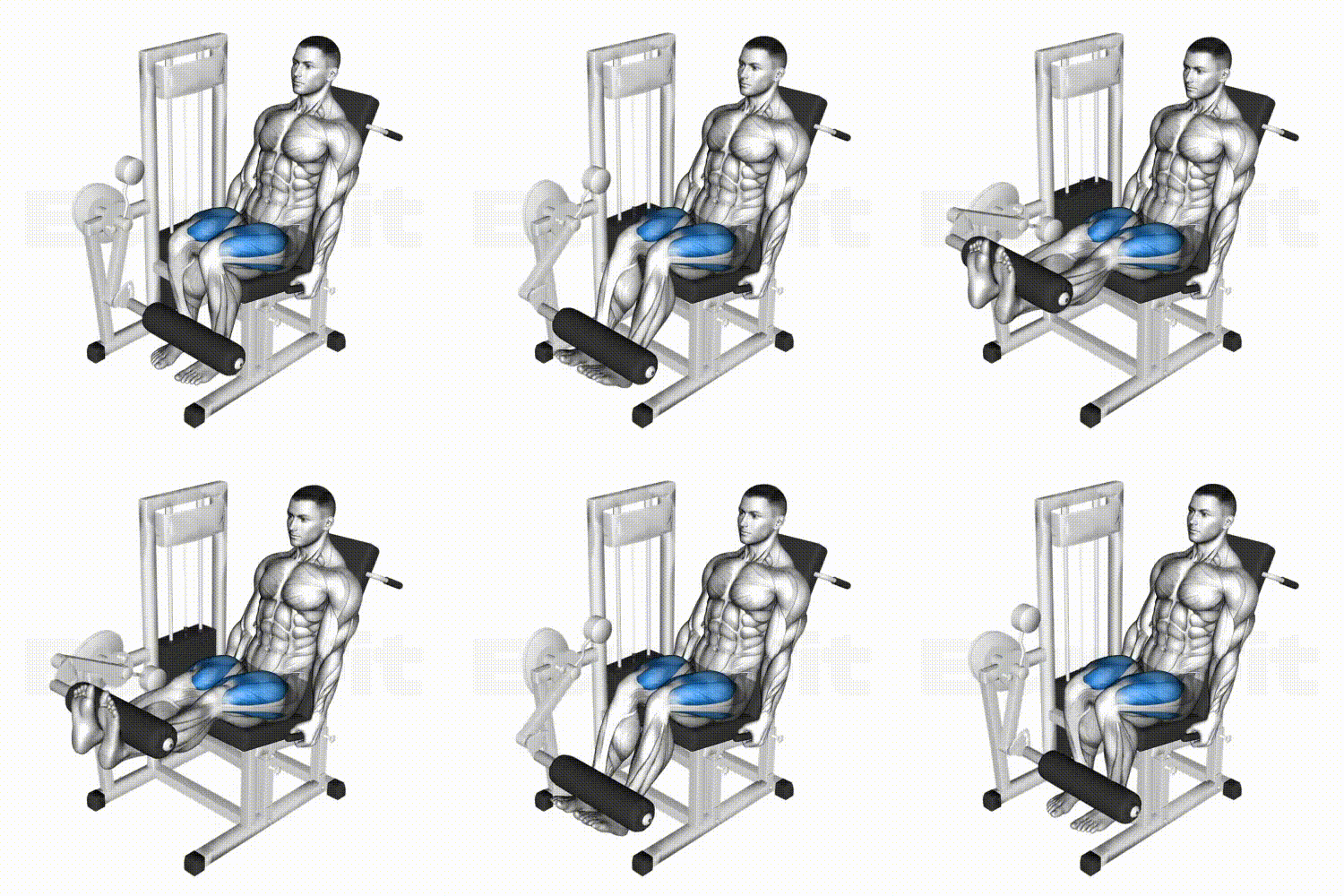

1. Leg Extension Machine Setup and Starting Position
The leg extension is a machine exercise that primarily targets the quadriceps, the muscles at the front of your thighs.
Before you start, take a moment to adjust the machine to fit your body.
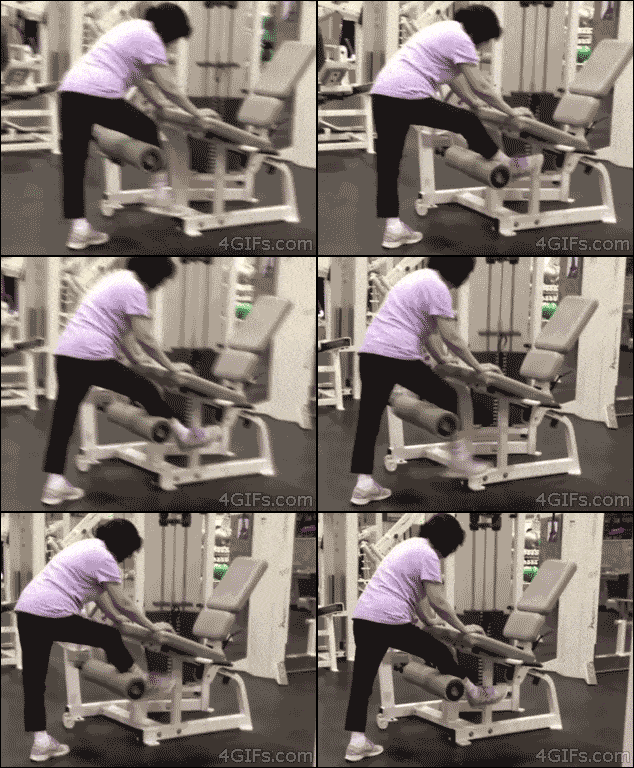
① Align Your Knees with the Machine’s Pivot Axis
Adjust the seat so that the center of your knee joint aligns as closely as possible with the machine’s pivot axis, the point around which the machine moves as you bend and extend your knees.
Check the machine’s instructions to help you find the appropriate position.
② Adjust the Shin Pad
Position the pad against the lower part of your shins, just above your ankles.
Make sure the pad doesn’t press against your feet or knees, and find a position that feels comfortable as you bend and extend your legs.
③ Keep Your Hips and Back Against the Seat
Sit with your hips on the seat and your back against the backrest. If the machine has handles, hold them to help keep your upper body stable throughout the movement.
Depending on the machine, the backrest position can affect your hip flexion angle. In a 10-week study of 22 untrained men, leg extensions performed at 40° of hip flexion produced greater rectus femoris hypertrophy than at 90°, while no clear difference was found in the vastus lateralis [1].
However, these findings don’t mean that 40° is best for everyone. The study involved untrained men, so its results may not apply equally to every lifter or machine. Focus on finding a comfortable, stable position that suits your body.
④ Choose a Manageable Weight
Rather than starting with a heavy load, choose a weight you can lift and lower without using momentum.
2. How to Perform the Leg Extension
Once the machine is set up, it’s time to perform the movement.
The leg extension involves straightening your knees to lift the pad, then slowly returning to the starting position.
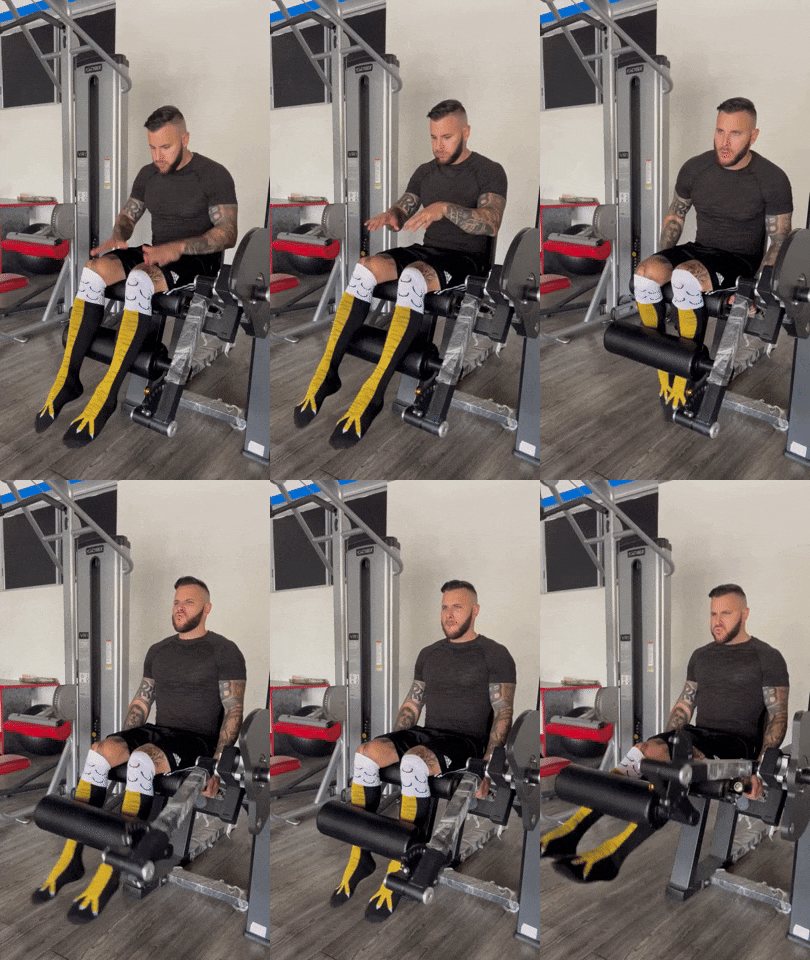
Step 1. Find Your Starting Position
Lean back against the backrest and keep your hips stable on the seat. Make sure the shin pad rests just above your ankles, then begin with your knees comfortably bent.
Hold the handles to keep your upper body steady, and allow your feet and knees to remain in a natural, comfortable alignment.
Step 2. Raise Your Legs with Control
Engage your quadriceps as you extend your knees and lift the pad.
Keep your torso in the position you established during setup. Avoid suddenly leaning backward during the rep or using momentum to lift the pad.
Extend your knees until they are nearly straight, without forcefully locking them out.
Step 3. Slowly Return to the Starting Position
After lifting the pad, don’t simply release the tension. Control the weight as you slowly lower your legs.
Keep your upper body and hips stable against the seat as you return. Maintain control throughout the movement instead of allowing the weight stack to slam together.
Step 4. Coordinate Your Breathing
Exhale as you lift the pad and inhale as you return to the starting position.
Avoid holding your breath, and keep your breathing natural and steady throughout the exercise.
Practical Guide: Sets, Reps, and Tempo
Once you’re comfortable with the basic movement, pay attention to your sets, reps, and movement speed.
Sets and reps: Beginners can start with 2–3 sets of 10–15 reps. Choose a weight that leaves you capable of completing approximately 2–3 more reps with good form at the end of each set (RIR 2–3).
Control your tempo: Take about 1–2 seconds to lift the pad and 2–3 seconds to lower it. Briefly pause at the top while maintaining control, without forcefully locking your knees.
Maintain your posture: Keep your hips and back stable against the seat as you lift and lower the pad. Avoid leaning your torso backward or using momentum to complete a rep.
These are starting points, not fixed rules for everyone. Adjust your sets, reps, and tempo based on your training experience, comfort, and recovery.
4. Track Your Leg Extension Progress with BurnFit 🔥
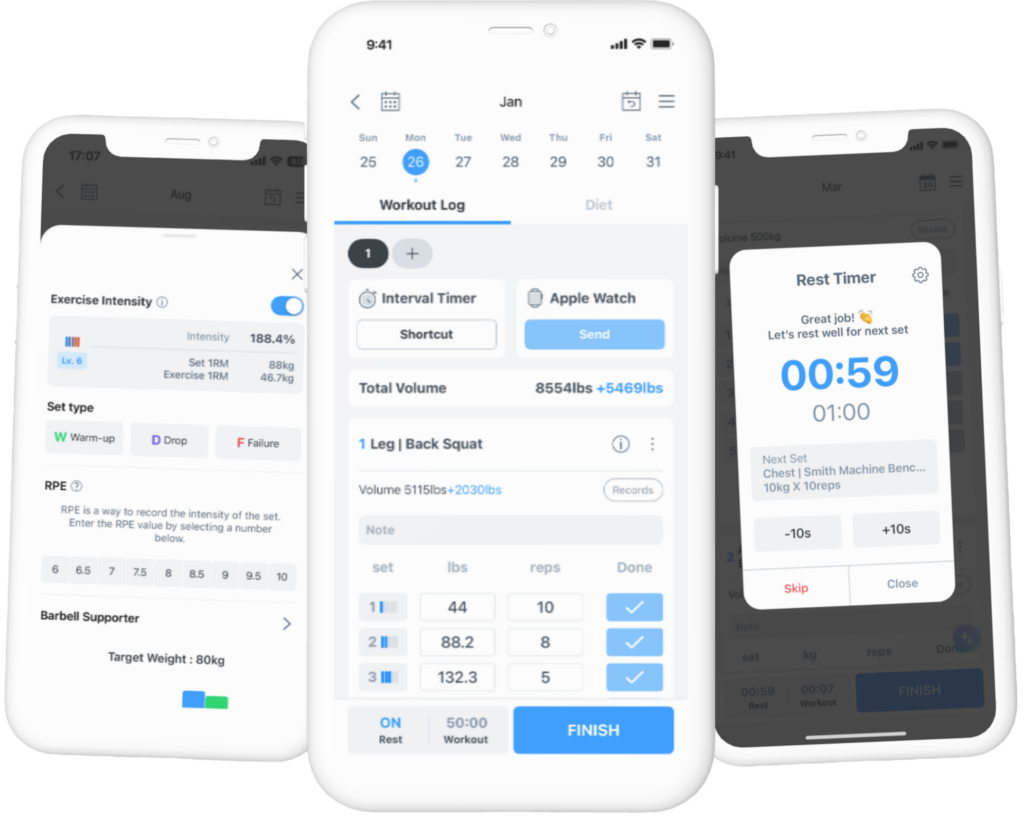
If you perform leg extensions regularly, try recording your weight and reps for every workout.
Keeping a record makes it easier to compare sessions and review how your training changes over time.
In BurnFit’s analysis of workout logs over a three-month period, the leg extension ranked first among exercises in the Legs category, accounting for 11.20% of records within that category. The barbell back squat ranked second at 9.49%.
These figures reflect exercise selection patterns among BurnFit users, rather than a ranking of exercises by effectiveness. Read the full analysis of popular exercises by muscle group.
With BurnFit, you can:
Record your sets: Log the weight and reps for each set so you can refer to them during your next workout.
Add workout notes: Record details such as your seat position, pad setup, and how the exercise felt, then review them before your next session.
Review your training volume: Use the workout volume graph in BurnFit PRO to track changes in your training volume over time.
Increasing the weight every session doesn’t have to be the goal. Start by building consistent technique, then use your workout records to guide your progress.
For a quick reference to the exercise, visit the BurnFit Leg Extension exercise library.
Looking to build a more balanced lower-body routine? Read our guide to thigh muscle exercises for tips on training your quadriceps, hamstrings, and adductors.


Leg Extension: 3 Tips for Better Form
Seated Cable Row: 3 Tips for Better Form
Strength Training for Beginners: 5 Exercises, Benefits & Routine
Hevy vs BurnFit: Which Workout Tracking App Fits the Way You Train?
7 Key Lower Body Strength Exercises for Every Muscle Group
Glute Exercises: 3 Key Points for Building Toned Glutes