

💪 Part 1. Building True Core Strength for Deep Muscles
Many people pull their stomach in or simply squeeze their abdomen when doing core workouts. However, this is an incorrect approach that actually makes the spine unstable. Before diving into your workout, use your everyday senses to awaken your core strength through this 3-step method.
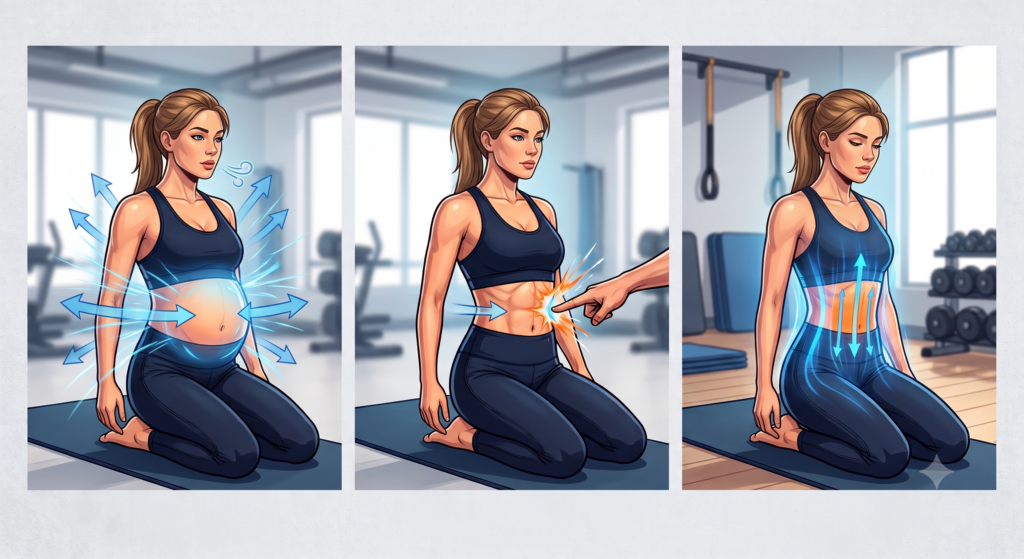
- Step 1. Make your abdomen round and full (Understanding Abdominal Bracing)
: Take a deep breath in, and focus on expanding your front abdomen and entire obliques like a balloon to make them firm. Step 2. Hold firm so it won’t cave in even if poked with a finger
: Imagine someone is about to punch you hard in the stomach. You must maintain that instinctual feeling of tensing up your abdomen, making it stone-hard to deflect the impact.- Step 3. Tighten the lower area like holding in a bathroom emergency
: Just like when you urgently hold in urine, lightly pull up your lower pelvic muscles (pelvic floor muscles) at the same time to completely lock in the central axis of your upper and lower body.
✔️ Part 2. Detailed Checkpoints for Core Exercises
Even the most common movements like the ‘Plank, Deadbug, and Bridge’ can deliver completely different results based on minor adjustments. Here are the key checkpoints to eliminate lower back strain and maximize muscle activation for each movement.
- Plank: Be careful not to let your lower back sag
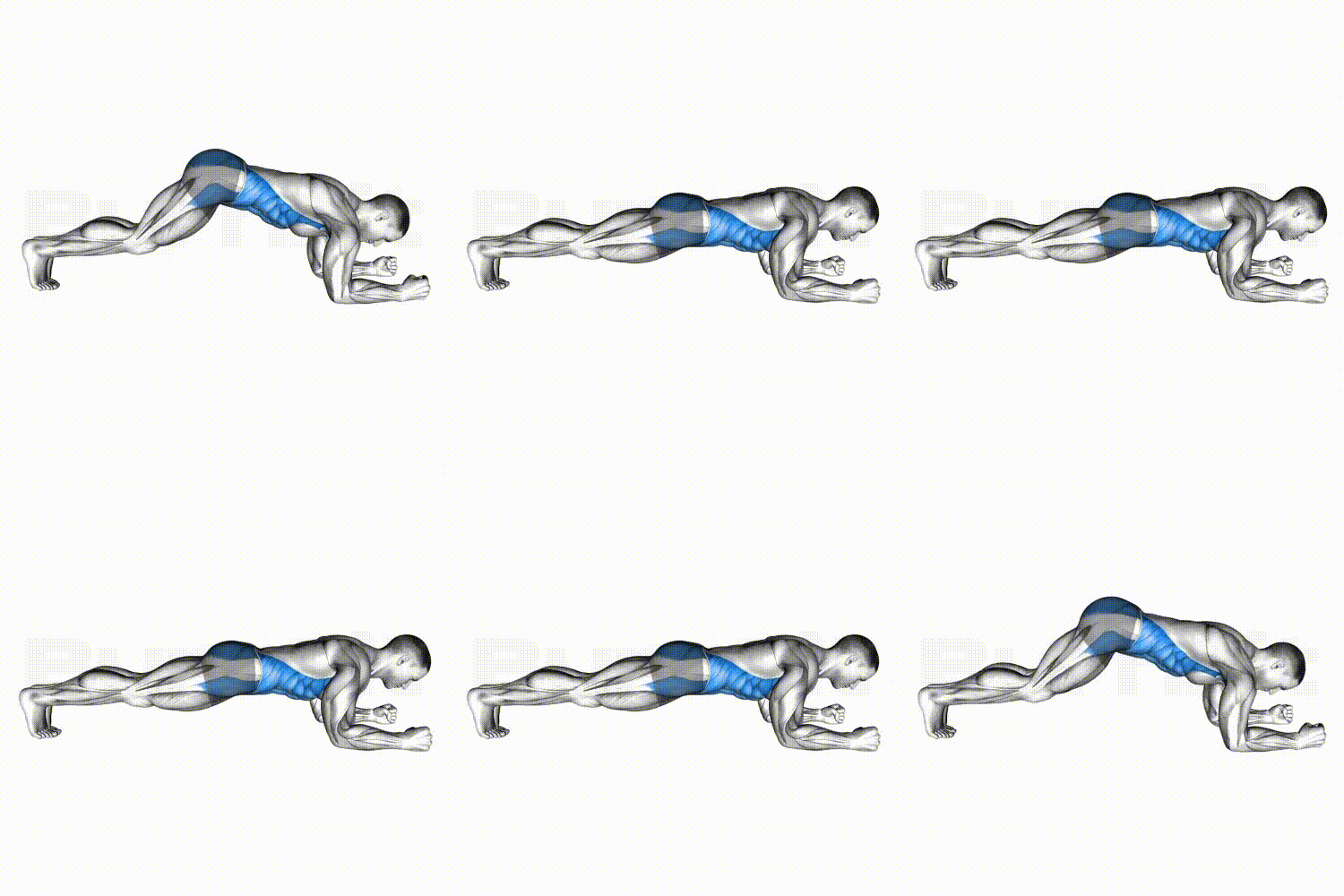
When doing a plank, if your lower back sags downward, all your body weight shifts to your spine, causing pain. At this moment, squeezing your glutes tightly will naturally flatten your lower back and drive intense activation into your abdomen. It is safe to hold a straight-line position without bending or arching your back.
- Deadbug: Press your lower back firmly into the floor so it doesn’t lift
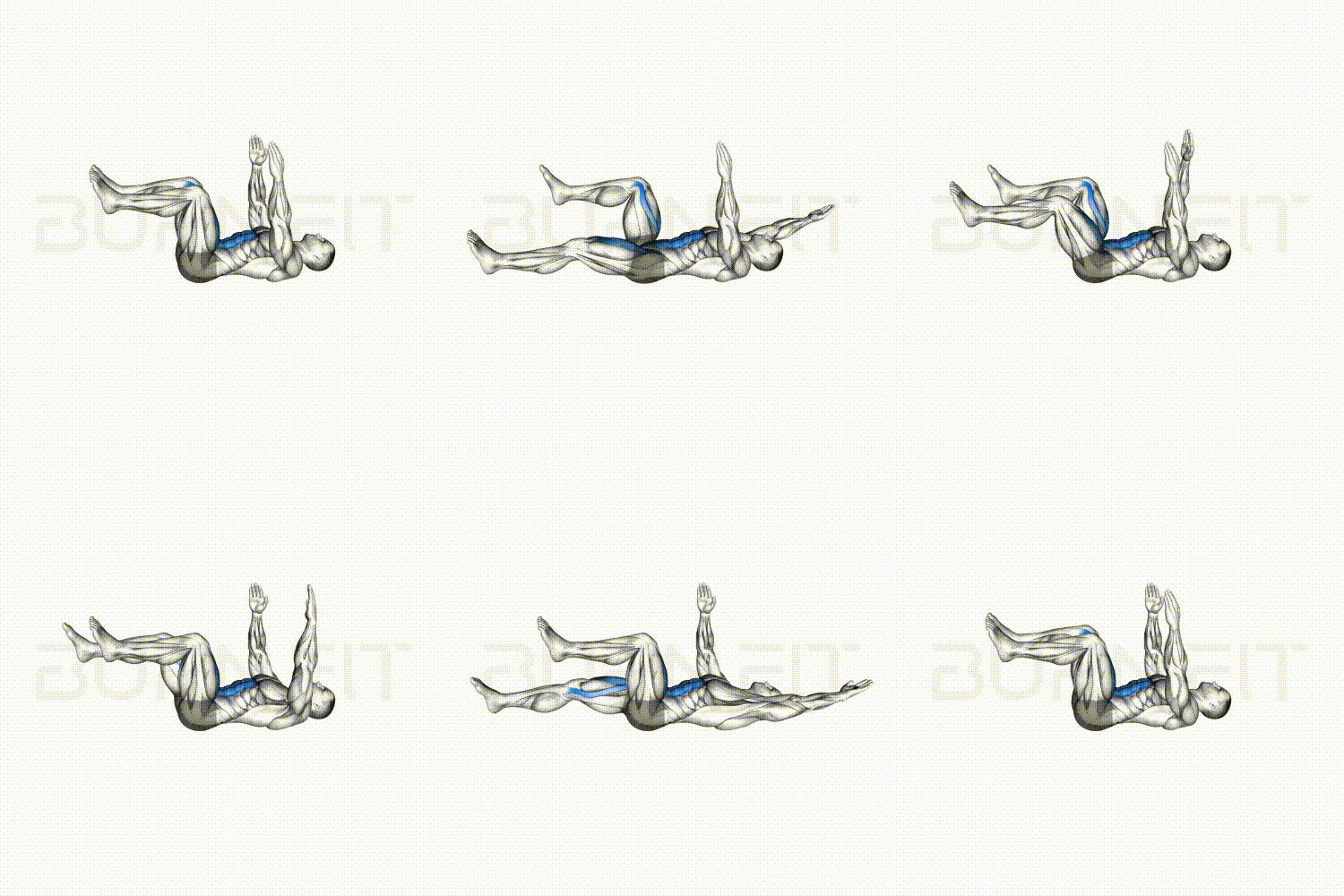
The deadbug, where you alternately move your arms and legs while lying down, is an excellent movement for spinal alignment. You must press your lower back firmly against the floor using your abdominal strength so that not even a single finger can slide in. Maintaining this flush connection while your limbs move is the key to getting the true benefits of the exercise.
Bridge: Do not arch your back; lift using your glutes and lower abs
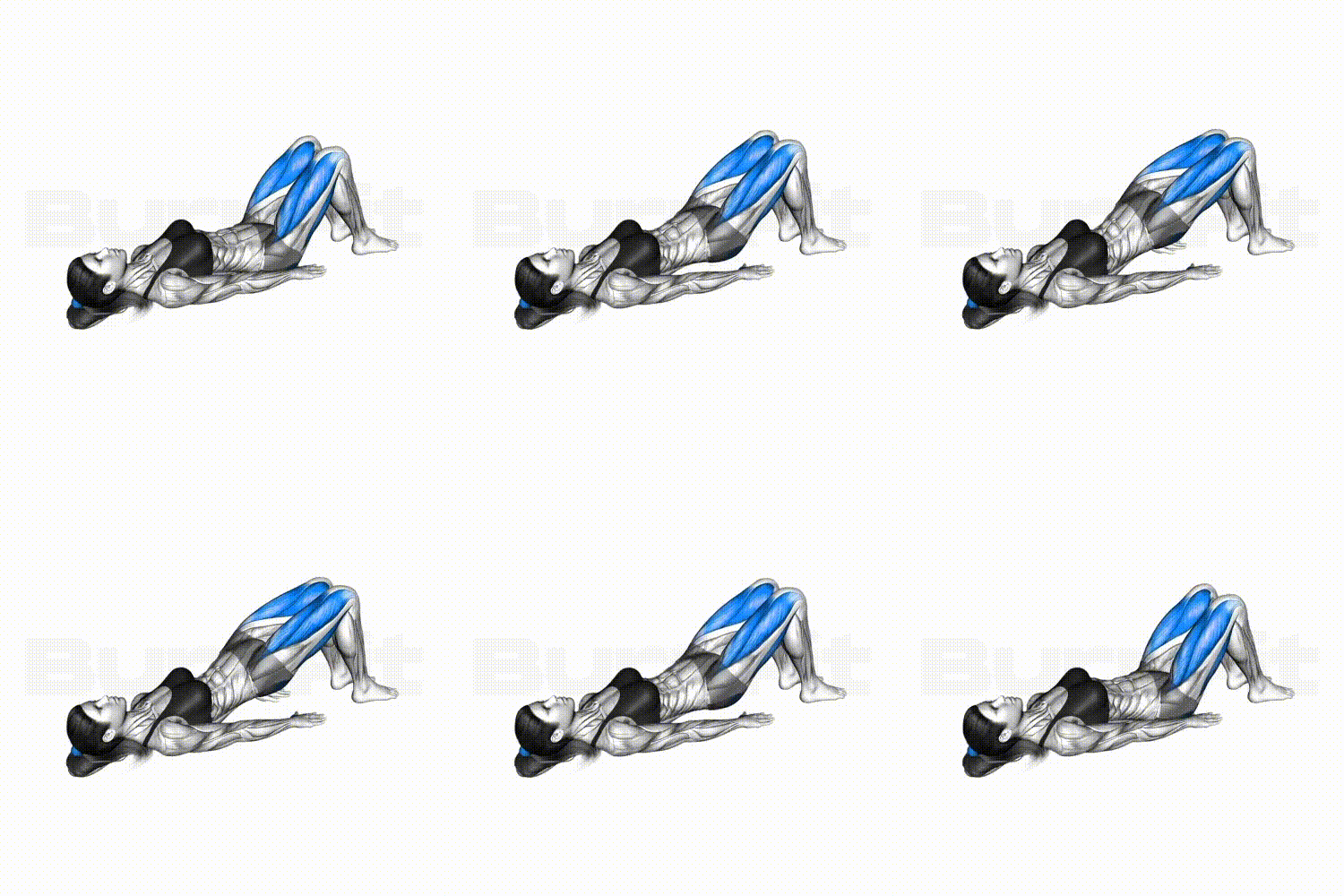
Trying to lift your pelvis blindly high will cause your lower back to overarch, losing core engagement and overworking your spinal erectors. Keep your lower back neutral and lift your pelvis solely by squeezing your glutes and lower abs to make your entire core firm simultaneously.
🔥 Part 4. Completing Your Own Core Routine by Logging on BurnFit
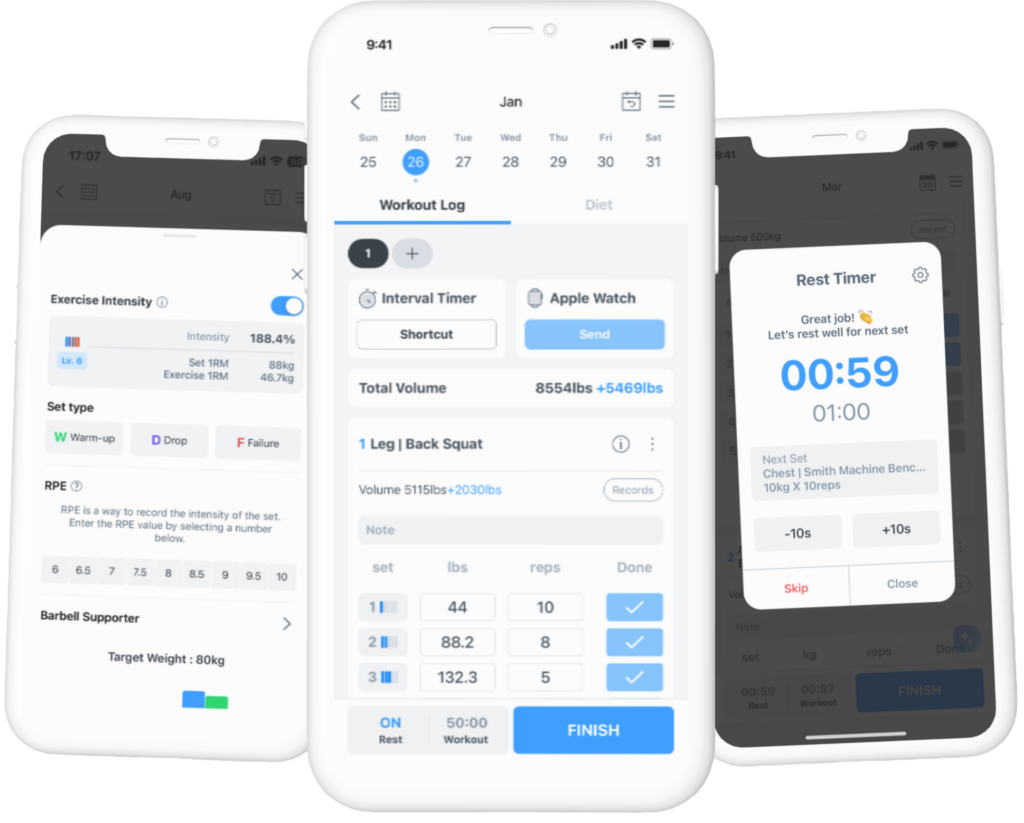
Core training is all about mastering proper form and finding the right activation points for your body. Setting up your own routine in the workout logging app ‘BurnFit’ and recording your daily form and physical responses will steadily increase your exercise performance. This is the most definitive way to see the changes in your body.
- Record your condition and how your core felt during today’s workout in the notes
: After logging your successful reps or hold times in the BurnFit app, you must write down immediate feedback about your body in the notes section. Leaving details about your daily condition and feelings—such as “Today, focusing on the feeling of zipping up my lower abs during planks completely eliminated my lower back pain” or “Waking up my core before doing squats definitely made my body less shaky”—creates a clear benchmark for your next session. - Track your growth with the BurnFit PRO Workout Volume Graph
: Once your core is locked in solid, your central axis stabilizes, allowing your overall weights and exercise sets to increase smoothly without strain. Regularly checking the workout volume graph provided by ‘BurnFit PRO’ allows you to visually prove with data how safely and securely you are breaking through plateaus and growing.


Glute Exercises: 3 Key Points for Building Toned Glutes
Thigh Muscle Exercises: 3 Key Points for Stronger Legs
Why Is Resistance Training Essential as You Age? 5 Key Benefits for Maintaining Muscle and Strength
How to Do the Dumbbell Lateral Raise in 5 Steps: Maximize Side Delt Activation
🔥 Top 10 Gym Workouts by Age Group: BurnFit Data Analysis
Progressive Overload: 5 Ways to Build Muscle