

❓ Part 1. Why Heart Rate is Key
Tracking your heart rate is known as a ‘Heart Rate-based Pace Guide’.
It is essential for beginners.

- Build Aerobic Endurance (Zone 2 Running)
- Running in the ‘Zone 2 (60-70% of maximum heart rate)’ range builds aerobic endurance most efficiently. This is a state where you can run while smiling and talking to others.
- Running in the ‘Zone 2 (60-70% of maximum heart rate)’ range builds aerobic endurance most efficiently. This is a state where you can run while smiling and talking to others.
- Talk Test
- If you don’t have a smartwatch, you can check your effort by seeing if you are not gasping for air and can speak in full sentences. This is a great indicator that you are in the safe Zone 2 range.
- If you don’t have a smartwatch, you can check your effort by seeing if you are not gasping for air and can speak in full sentences. This is a great indicator that you are in the safe Zone 2 range.
- Prevent Overpacing and Injury
- Beginners often fall into ‘overpacing’. Remember, if your heart rate spikes too high, it puts strain on your muscles and joints and overloads your heart. The secret to long-term success is maintaining your heart rate or breathing at an optimal level.
🏃♀️ Part 2. Finding Your Running Spot: Outdoor vs. Treadmill Routine
Depending on where you run, the physical impact and pacing strategies differ. Choose the spot that suits your preference and apply our ‘Heart Rate-based Pace Guide’.
① Outdoor Running: Feeling Nature
Outdoors, the varied terrain helps strengthen the stabilizer muscles around your ankles and lower body. Note that wind and slopes can affect your pace, so actively utilize your body’s signals and device notifications.
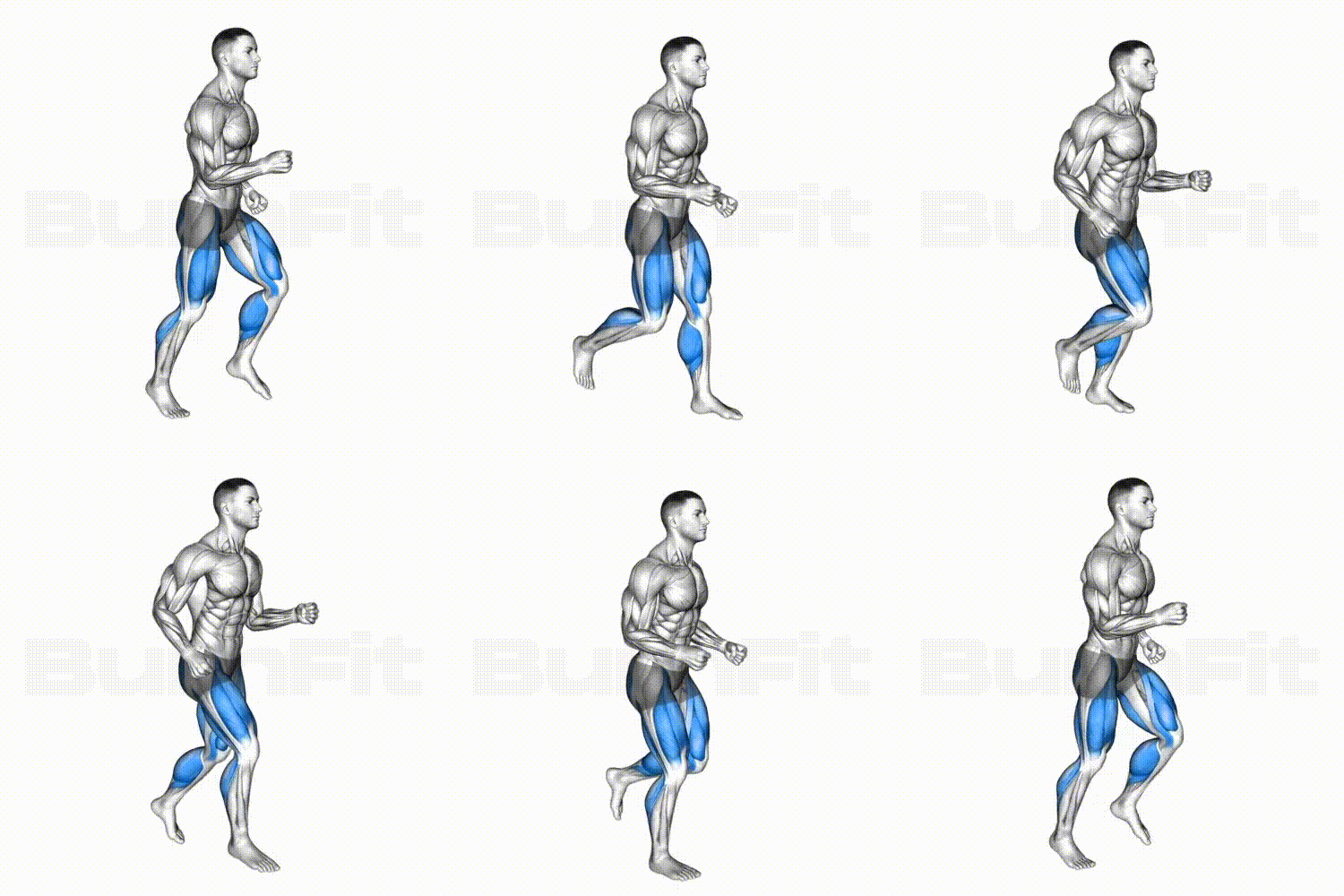
- Warm-up: 5 mins of light walking to raise body temperature.
- Main Run: 20 mins while maintaining a Zone 2-3 heart rate. The recommended Running for Beginners pace should be based on your breathing, not speed. (Check your heart rate screen, or keep a pace where you can ‘hum a song’ lightly.)
- Cool-down: 5 mins of slow walking to lower your heart rate.
② Treadmill Routine: Boredom-Free
Treadmills make it easy to maintain a steady pace, and there is less ground reaction force than outdoors, reducing joint stress. We recommend a slight incline to keep it interesting.
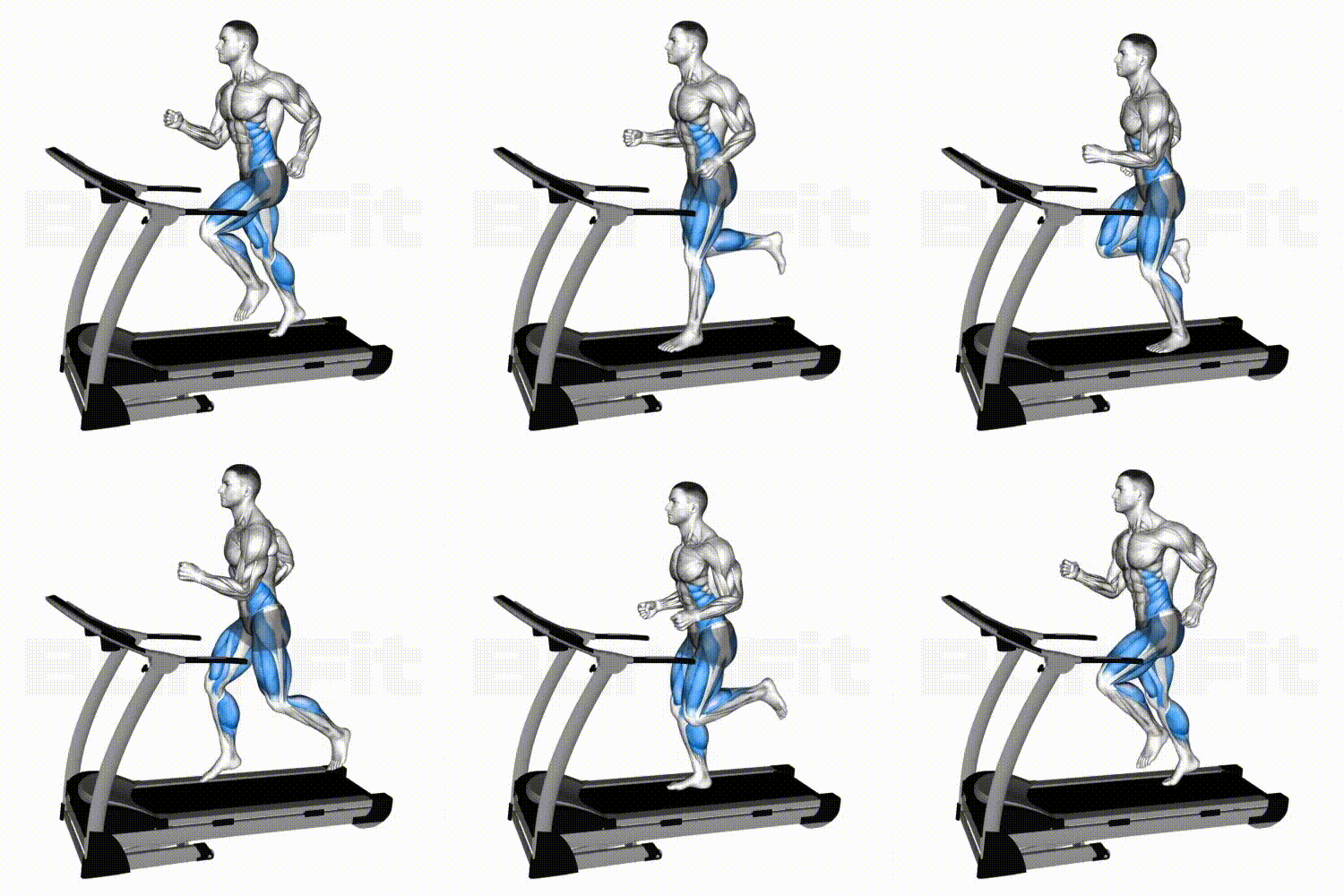
- Warm-up: 5 mins at speed 5.0.
- Main Run (1-2% Incline): Slightly increase the incline to mimic outdoor conditions. Then, check your heart rate sensor and find your ‘optimal running pace that you can maintain for over 30 minutes’ to run steadily for 20 mins.
- Cool-down: 5 mins at speed 4.0, slowing down gradually.
–
⚠️ Injury Prevention! Mistakes Beginners Must Avoid
Safety is key. Remember these two points:
- Avoid Running Every Day
- Without recovery, you risk ‘Shin Splints’ or ‘Plantar Fasciitis’. Start with 3 days a week (alternate days) to allow your body to adapt.
- Use Proper Shoes
- Impact on your knees and ankles is 3-4 times your body weight. Beginners should start by wearing entry-level running shoes that provide good shock absorption to protect their joints.
🔥 Part 3. Tracking Your Running Data & Condition with BurnFit
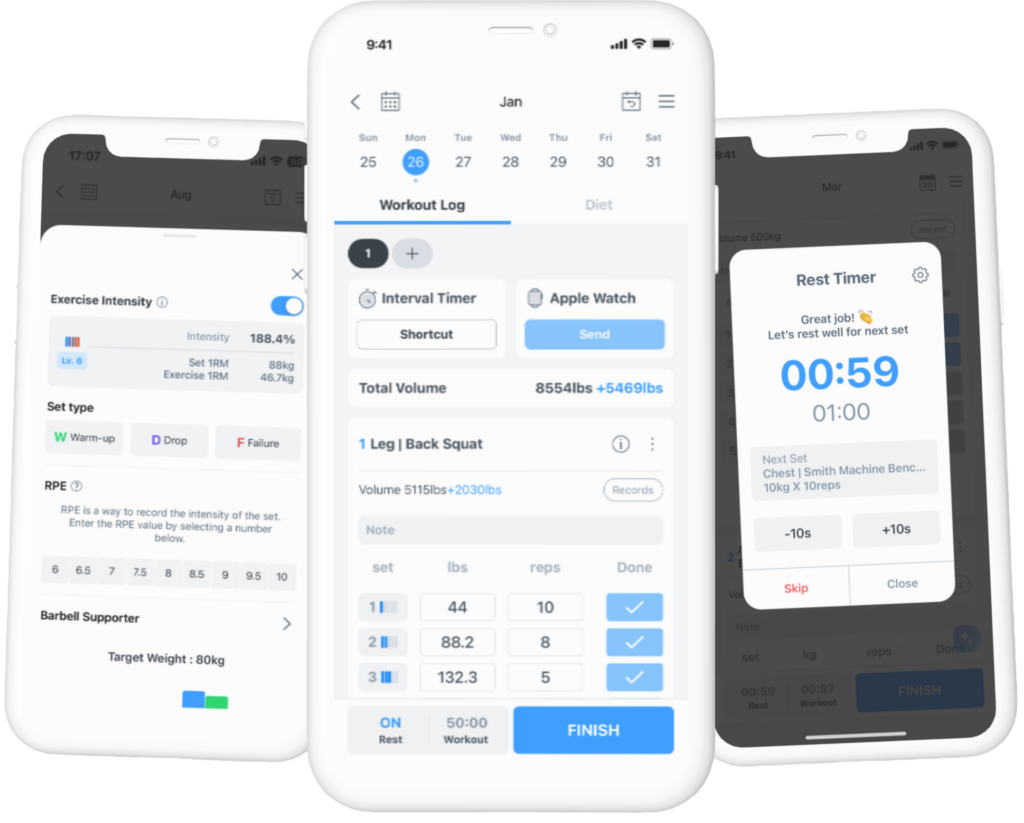
Just like weight training, running shows visible growth when you consistently record your progress. Use the fitness tracking app ‘BurnFit’ to systematically manage your running performance.
- Log Your Daily Workout and Condition (Using the Notes Feature)
: In the BurnFit app, select ‘Running’ for outdoor runs and ‘Treadmill’ for indoor workouts to log your session. By recording the average heart rate, total distance, and duration displayed on your smartwatch or console in the notes, you can create your own professional running log. - Check the Correlation Between Running and Leg Day Condition
: You can gain insights like, “I ran 3 times this week, and I noticed my squat felt a bit heavy during my weekend session.” This allows you to adjust the balance between your lower-body strength training and running, helping you build a smarter, injury-free running life. - Data Analysis with BurnFit PRO
: Subscribe to ‘BurnFit PRO Membership’ to receive personalized athletic insights, weekly improvement points, and a habit index based on your logged data through ‘AI Weekly Reports’. Furthermore, you can use ‘Monthly Reports’ to visualize your training trends at a glance, helping you achieve a more strategic running lifestyle.


Seated Cable Row: 3 Tips for Better Form
Strength Training for Beginners: 5 Exercises, Benefits & Routine
Hevy vs BurnFit: Which Workout Tracking App Fits the Way You Train?
7 Key Lower Body Strength Exercises for Every Muscle Group
Glute Exercises: 3 Key Points for Building Toned Glutes
Thigh Muscle Exercises: 3 Key Points for Stronger Legs