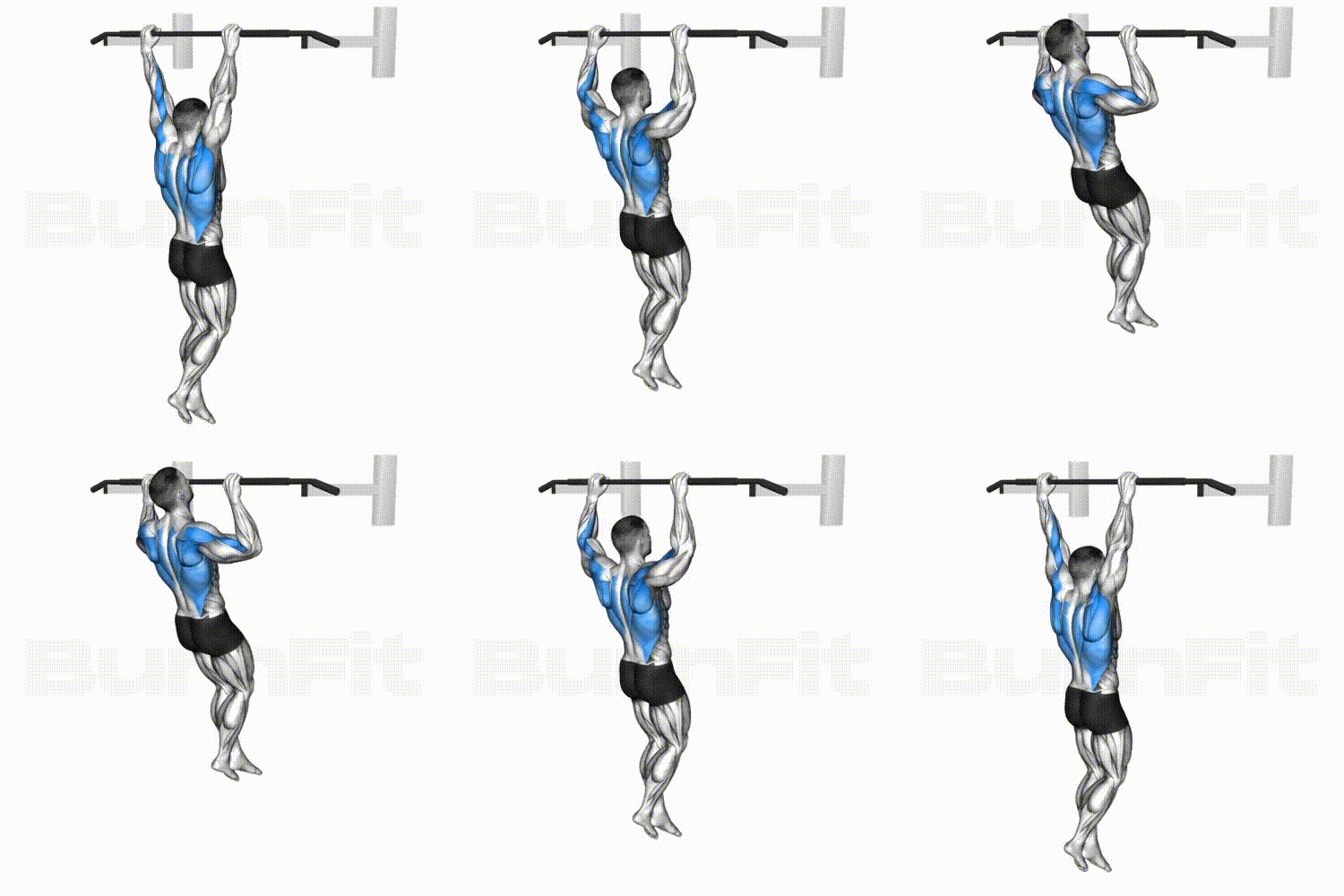

1. Escaping 0 Reps: A Step-by-Step Pull Up Progression
For beginners, achieving that first pull-up is no easy feat. This is because the back and shoulder muscles haven’t yet developed enough to lift your body weight. Instead of just pulling with your arms, follow the step-by-step pull up progression below.
- Step 1: Get Used to the Bar (Dead Hang)
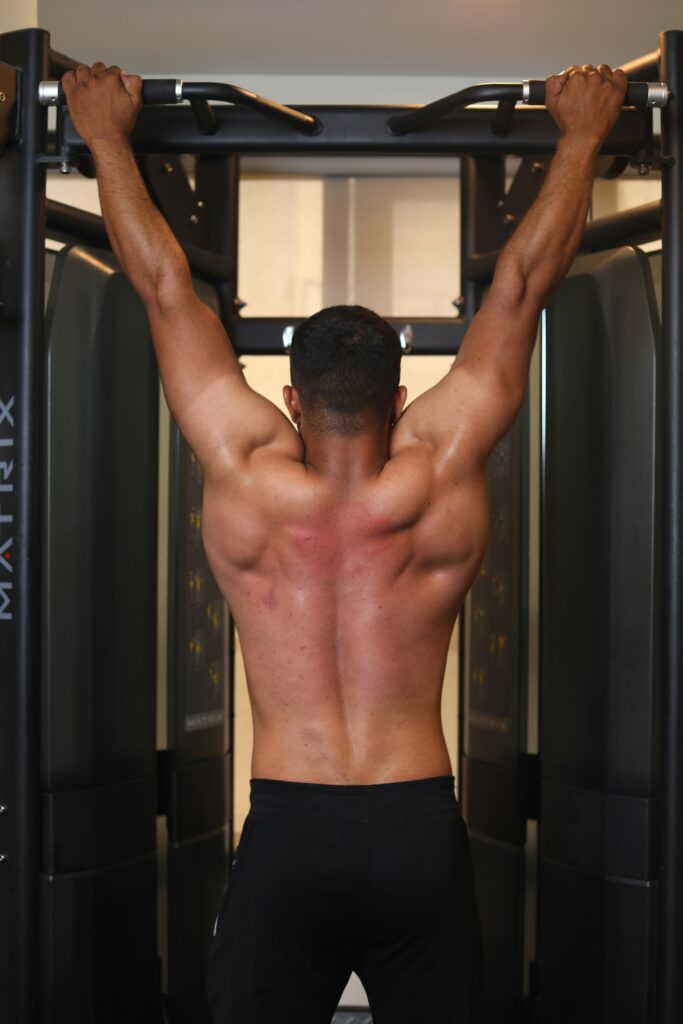
- How-to: Grab the bar slightly wider than shoulder-width and hang with your body completely relaxed.
Point: Focus on your grip strength to hold your weight rather than pulling. Concentrate on the feeling of stretching your lats so that your ears and shoulders move apart. Gradually increase your hang time until you can hold it for 30 seconds to 1 minute.
- Step 2: Scapular Control (Shoulder Packing)
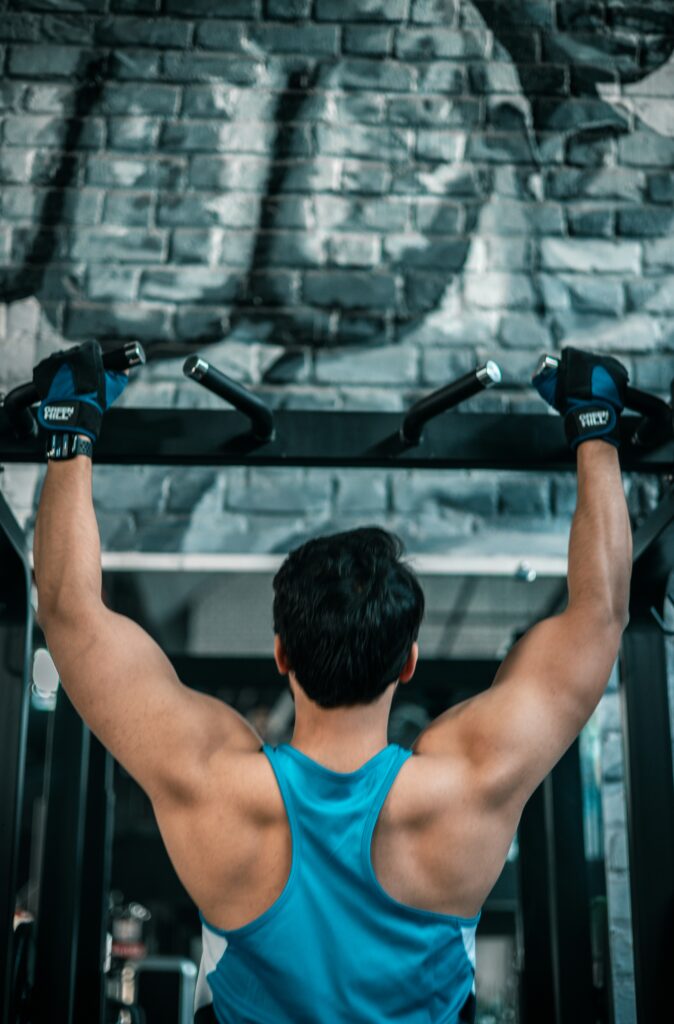
How-to: While hanging with your arms straight, pull only your shoulder blades down and lift your chest slightly.
Point: This is the starting engine to pull with your ‘back’, not your arms. It prevents shoulder injuries and helps you learn the sensation of directly engaging your lats for proper pull-up form.
- Step 3: Resisting on the Way Down (Negative Pull-ups)
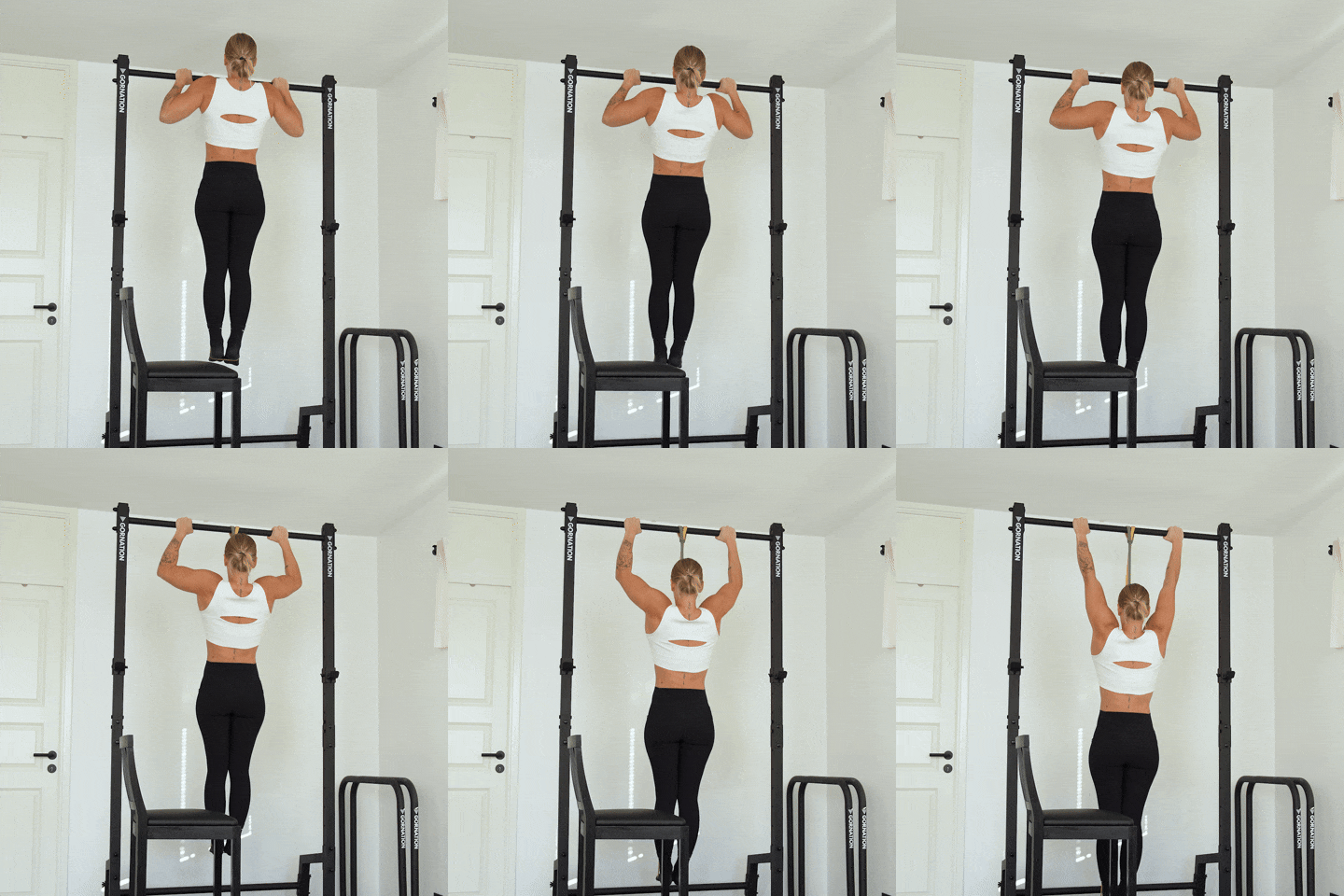
How-to: Step on a chair to get into the ‘contracted position’ with your chin above the bar, then lower yourself as slowly as possible over 3 to 5 seconds.
Point: Muscles grow the most when they lengthen under tension. This negative method is the fastest and most foolproof way to turn 0 reps into 1.
💡What is a Negative Pull-up?
-> It is an exercise based on the principle that muscles can exert more force when lengthening (lowering) than when contracting (pulling up). Beginners can use a jump or a chair to get into the top position first, then focus entirely on the lowering motion to build core back strength.
2. Skyrocket Your Reps Without Plateaus
Once you’ve activated your back muscles with negative pull-ups, it’s time to use assistance tools to seriously increase your reps. Gradually reduce the assistance to work your way toward a perfect unassisted pull-up.
- Using a Pull-up Band: Loop a resistance band around the bar and place your knee or foot inside. Incorporating resistance band pull-ups helps you get used to engaging your back muscles. Start with a thick band and progressively switch to thinner ones to build strength.
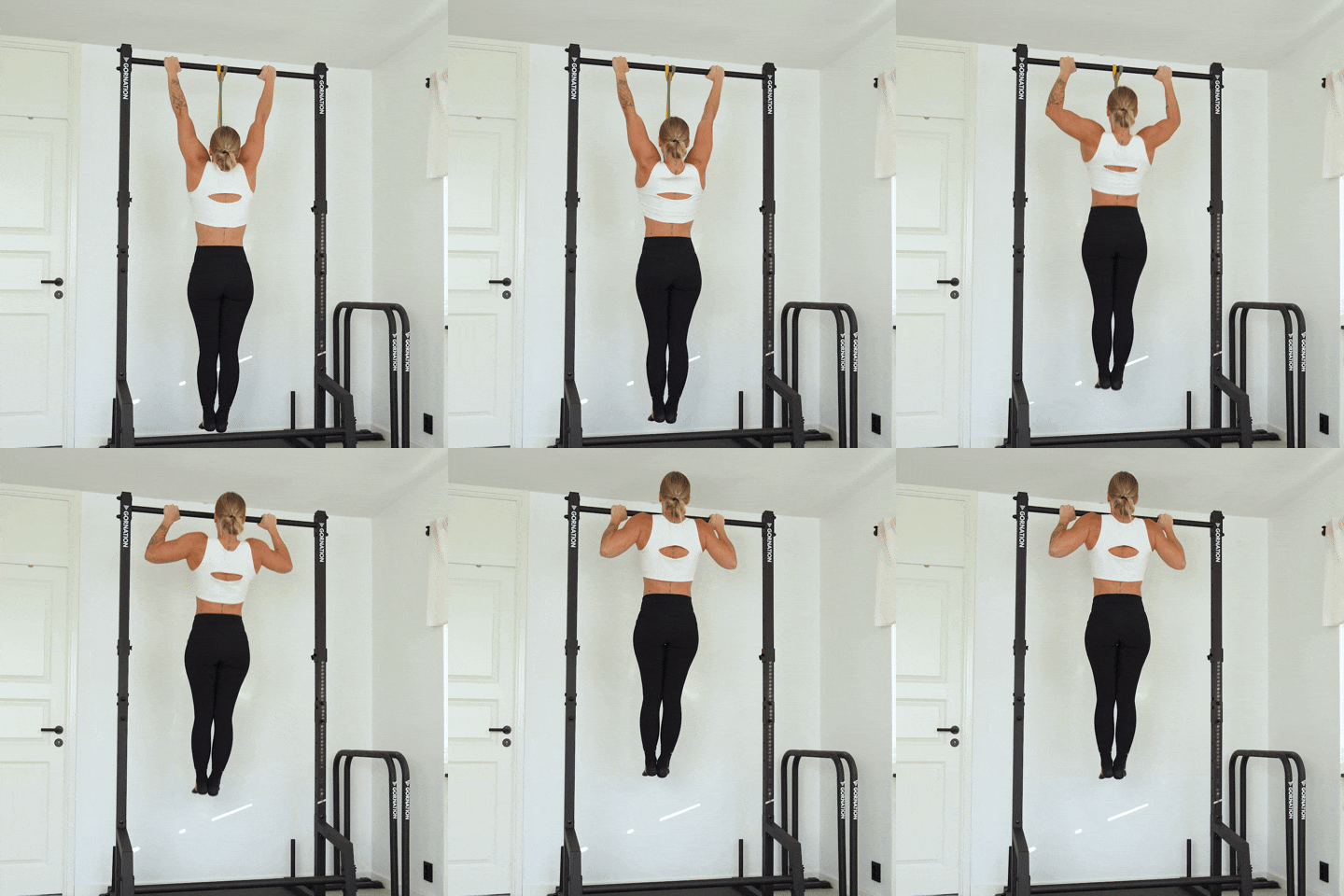
- Assisted Pull-up Machine: Set the counterweight you need. Adjust the weight so you can perform about 10 reps. Gradually lower the weight to progress toward an unassisted pull-up.

3. The Incredible Benefits of Your First Pull-Up
Once you conquer your first pull-up, your body will gradually undergo amazing changes. As an essential back workout for beginners, a pull-up goes beyond simple strength; it has the power to completely reshape your upper body frame.
- Targeted Muscle Growth: The V-Taper Frame

Pull-ups are optimized to build the ‘latissimus dorsi’ (outer back muscles), the largest muscles in the upper body, making them wider and thicker. A wider back creates the perfect visual ratio (V-Taper) by making the waist look significantly narrower and the shoulders broader.
- Posture Correction: Fixing Round Shoulders
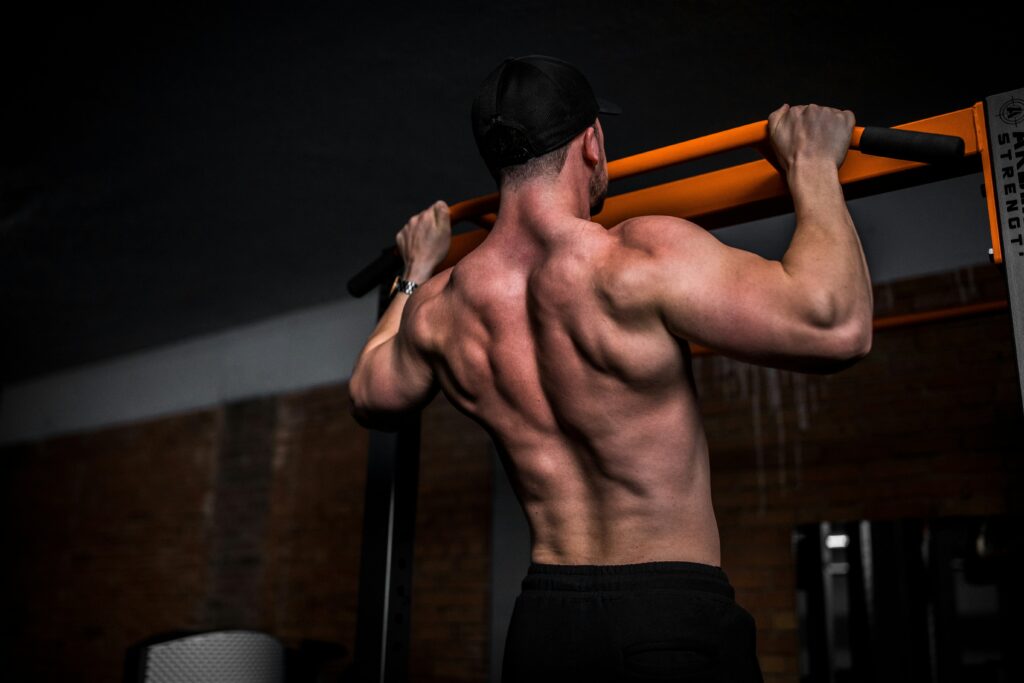
They are incredibly effective to fix rounded shoulders and a hunched back—common issues for modern people due to smartphone and PC use. As your back muscles strengthen, they firmly pull your rounded shoulders backward, creating an upright and straight posture.
- Improved Upper Body Function: Core and Coordination

A pull-up isn’t an isolation exercise just for the back. It simultaneously develops the entire upper body’s nervous system and muscles—from the grip strength holding the bar to the forearms and biceps pulling your weight, and the abdominal core muscles stabilizing your hanging body.
🔥 Record Your Pull-Up Journey with BurnFit
Pull-ups never lie.
A 10-second hang today becomes 15 seconds tomorrow, and that time adds up to the thrilling result of 1 strict pull-up.
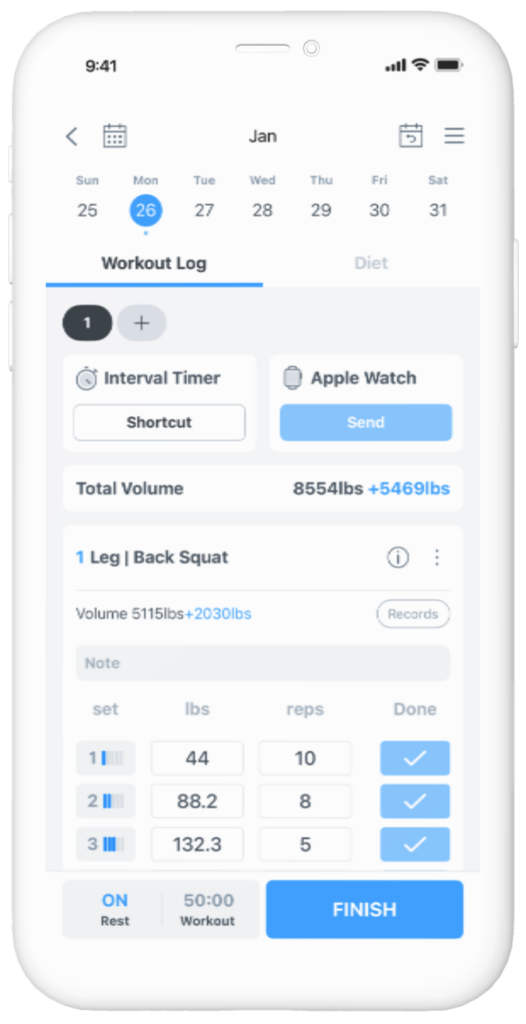
Use the intuitive workout tracker app ‘BurnFit’ to carefully log your dead hang times, negative sets, and changes in band thickness every day. Feeling the physical changes as your reps increase from 0 to 1, and seeing those results visually through your logs, is the ultimate motivation.


Strength Training for Beginners: 5 Exercises, Benefits & Routine
Hevy vs BurnFit: Which Workout Tracking App Fits the Way You Train?
7 Key Lower Body Strength Exercises for Every Muscle Group
Glute Exercises: 3 Key Points for Building Toned Glutes
Thigh Muscle Exercises: 3 Key Points for Stronger Legs
Why Is Resistance Training Essential as You Age? 5 Key Benefits for Maintaining Muscle and Strength