Why You Never Feel One-Arm Dumbbell Rows in Your Back
Is the one-arm dumbbell row the best exercise for building massive forearms?
A lot of people might say yes.
And that’s exactly the problem.
The one-arm dumbbell row is not supposed to be a forearm exercise. It is one of the most classic back exercises, designed to target your lats, upper back, and pulling strength.
But walk into any gym, and you will see the same thing.
Someone gripping a heavy dumbbell.
Holding their breath.
Yanking the weight up like their life depends on it.
The effort is real.
The back activation?
Not so much.
Instead, the forearms are on fire.
The biceps are fried.
And the lats are just… somewhere in the background.
A back exercise that somehow leaves your back out of the conversation.
That is why so many people get the one-arm dumbbell row wrong.
Let’s break down how to fix your one-arm dumbbell row form and actually feel it where you are supposed to: your back.
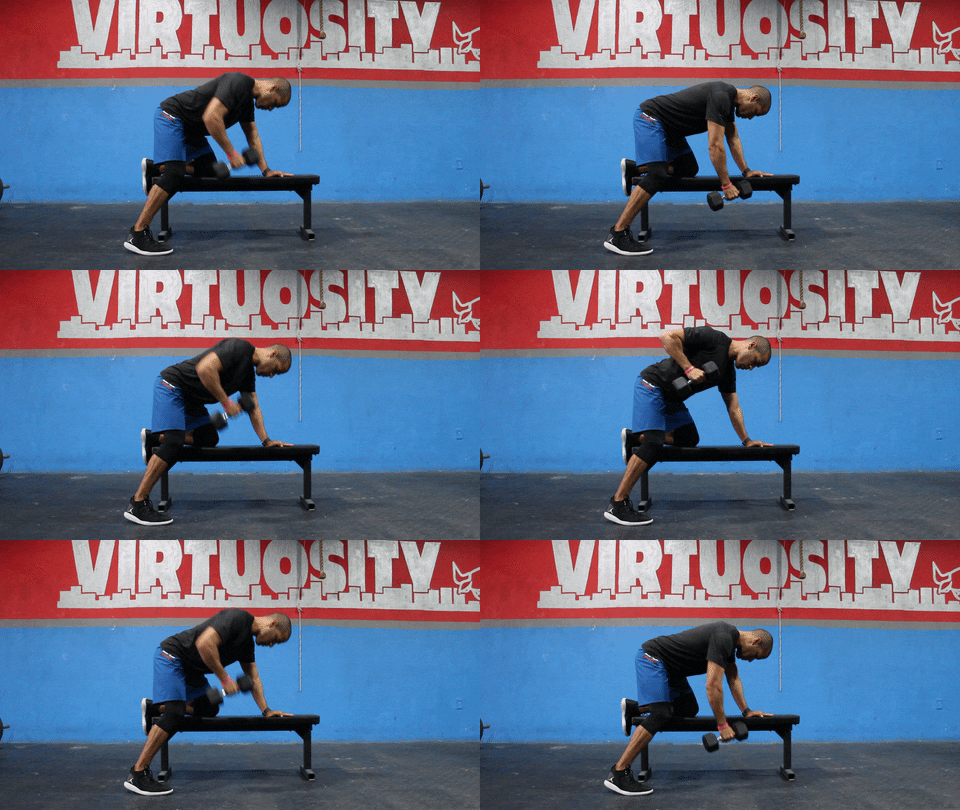
Why One-Arm Dumbbell Row Form Is Harder Than It Looks
It looks easy. That’s why it’s hard.
The one-arm dumbbell row looks simple.
Put one hand on a bench.
Grab a dumbbell.
Pull it up.
Done.
Except, not really.
The reason this exercise is tricky is that most of us are used to pulling with our arms. When we pull a door, pull a bag, or pull something toward us, the arms take over first.
The same thing happens in the gym.
You are supposed to pull with your back.
But your body chooses the shortcut.
It pulls with your arm.
That is why your forearm gets tired before your lats.
That is why your biceps burn before your back does.
And that is why your dumbbell row form matters more than the weight you are holding.
Arm Workout vs. Back Workout
At first glance, the one-arm dumbbell row feels like a “lift the dumbbell” exercise.
But that is the trap.
The goal is not to lift the dumbbell as high as possible.
The goal is to pull through your back and create a strong lat contraction.
If you think “lift the dumbbell,” you will chase height.
And once the weight gets heavy, your torso starts twisting, your shoulder starts rolling, and your ego starts doing cardio.
The dumbbell goes up.
But your lats do not get much out of it.
In the one-arm dumbbell row, the most important thing is not how high the dumbbell travels.
It is where your elbow goes.
Pull the dumbbell with your hand, and it becomes an arm workout.
Drive your elbow back, and it becomes a back workout.
Of course, everyone’s body is different. Your ideal range and angle may vary depending on your build, mobility, and limb length.
But the basic rule stays the same.
Do not just pull the dumbbell upward.
Drive your elbow behind your body and find the path where your lats actually contract.
That is the difference.
3 Rules That Turn the One-Arm Dumbbell Row Into a Real Back Exercise
1. Pull your elbow back, not the dumbbell up
The dumbbell is just the tool.
Your elbow is the cue.
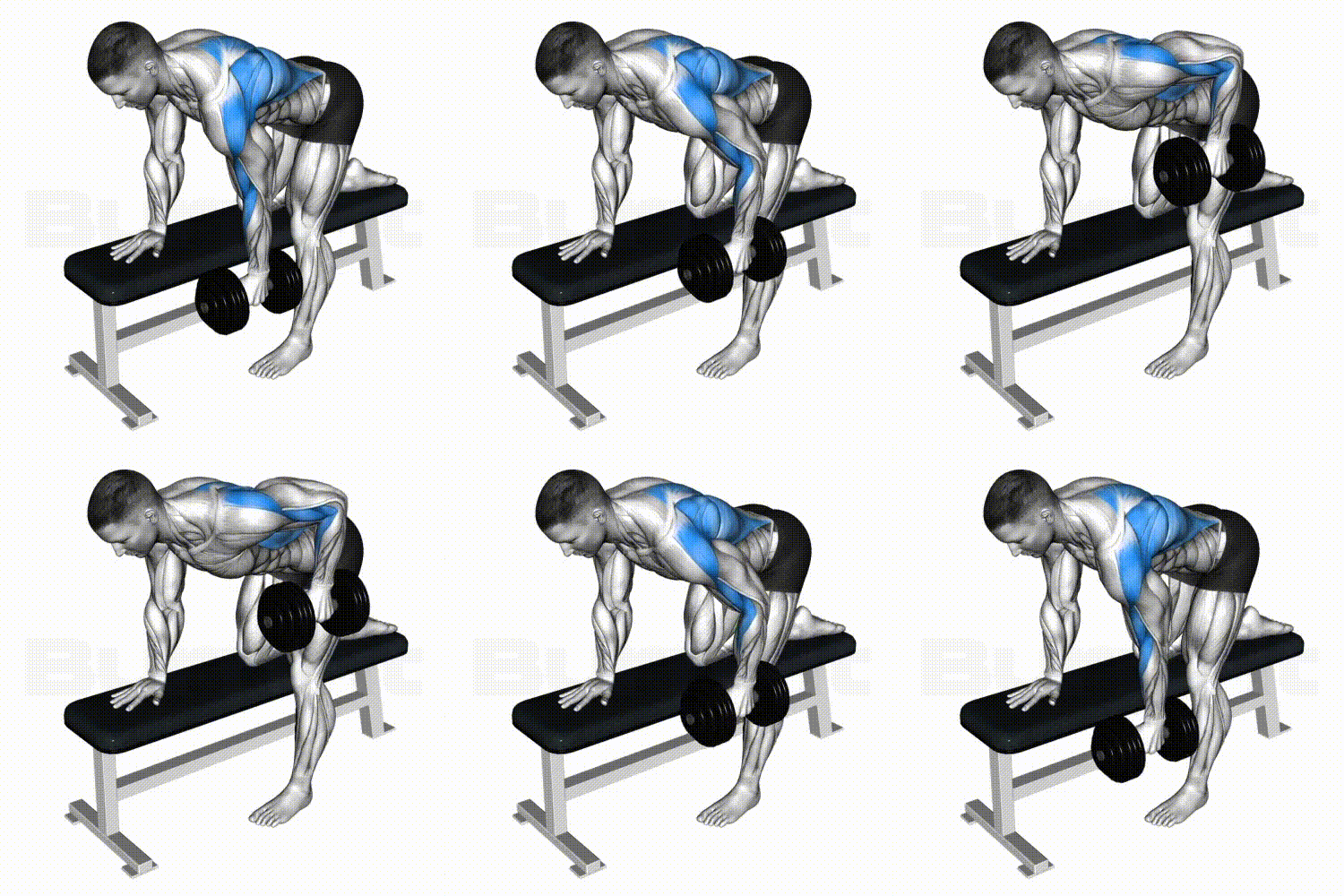
Keep your arm close to your torso and think about driving your elbow toward your hip. This makes it much easier to feel your lats instead of your biceps.
Not easy.
Just slightly less confusing.
That still counts.
2. Keep your shoulder from rolling forward
If your shoulder collapses forward, your back cannot contract properly.
Keep your chest slightly open.
Do not let your upper body curl into the bench.
Think of it like setting your upper back before a deadlift.
Strong chest. Stable torso. Controlled movement.
The better your position, the better your lat activation.
3. Control the lowering phase
Yes, pulling the dumbbell up feels harder.
It is heavy.
Obviously.
But the way down matters just as much.
When you lower the dumbbell slowly, you keep tension on your back for longer. This gives your lats time to stretch, stay engaged, and actually do the work.
Do not just drop the weight.
Control it.
That is where a lot of the good stuff happens.
Why the One-Arm Dumbbell Row Is So Good
It gives you strong lat activation and a deep range of motion
Your lats, or latissimus dorsi, help create the width of your back and the shape of your upper body.
In other words, they help build the kind of back that changes how your shirts fit.
The one-arm dumbbell row is great because it lets you train one side at a time, focus on the contraction, and move through a long range of motion.
Compared to exercises like the lat pulldown or barbell row, the one-arm dumbbell row can make it easier to feel your lats stretch and contract.
That is a big deal.
Because in back training, feeling the muscle is half the battle.
The one-arm dumbbell row is useful because it helps you:
- Feel your lats more clearly
- Check left-right strength balance
- Train effectively with just one dumbbell
- Learn the basic pulling pattern for back workouts
In short, the one-arm dumbbell row is not just a back exercise.
It is one of the best exercises for learning how to actually use your back.
BurnFit Helps You Build a Better One-Arm Dumbbell Row
More accurately, tracking helps you build a better one-arm dumbbell row.
Did your lats fire today?
Did your forearms take over again?
Did your elbow move back properly?
Did you feel your back stretch on the way down?
These details are clear right after the set.
But by tomorrow, they are gone.
That is why tracking matters.
Not just the weight.
Not just the reps.
Not just the sets.
Track what actually happened.
Which weight gave you the best lat activation?
At what point did your form start breaking down?
Which side felt weaker?
Which cue helped you feel your back more clearly?
When you write these things down, your next workout changes.
You stop guessing.
You start adjusting.
If you want to get better at the one-arm dumbbell row, the weight matters.
But the feeling matters too.
And the feeling is easy to forget.
So track it.
Build the habit.
Make every session count.
BurnFit
Log it, Live Better.

Key Takeaways
- The one-arm dumbbell row is not a forearm exercise. It is a lat-focused back exercise.
- If you pull with your hand, it becomes an arm workout. If you drive your elbow back, it becomes a back workout.
- Proper one-arm dumbbell row form depends on elbow direction, shoulder position, and controlled movement.
- If your torso twists or your shoulder rolls forward, your lat activation drops.
- Tracking your weight, reps, sets, and form cues can help you make real progress over time.


Seated Cable Row: 3 Tips for Better Form
Strength Training for Beginners: 5 Exercises, Benefits & Routine
Hevy vs BurnFit: Which Workout Tracking App Fits the Way You Train?
7 Key Lower Body Strength Exercises for Every Muscle Group
Glute Exercises: 3 Key Points for Building Toned Glutes
Thigh Muscle Exercises: 3 Key Points for Stronger Legs