The Complete Bench Press Guide: Building a Broad and Solid Chest

Not just blindly pushing the weight up.
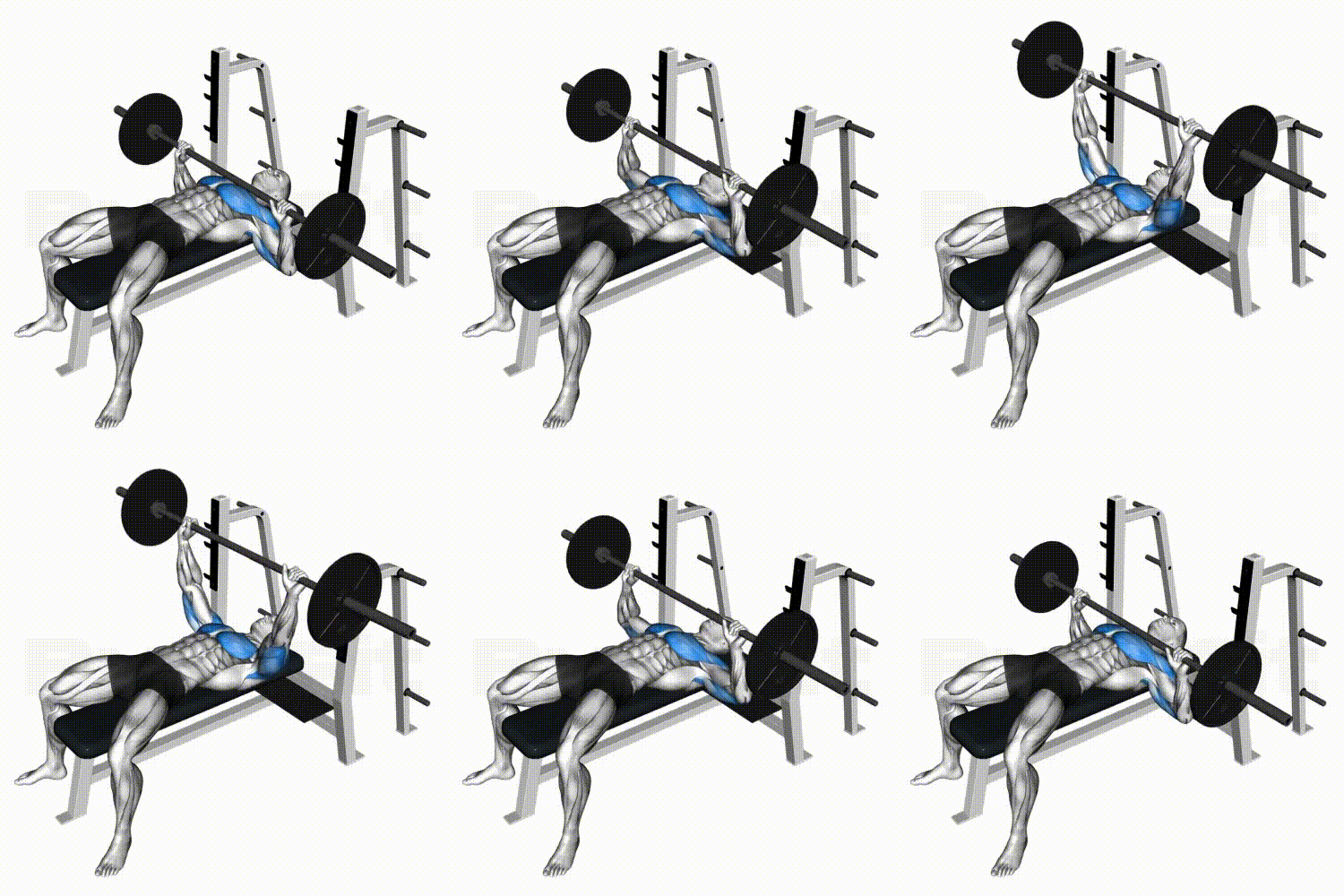
The clear bench press stimulation and effect that comes from correct posture.

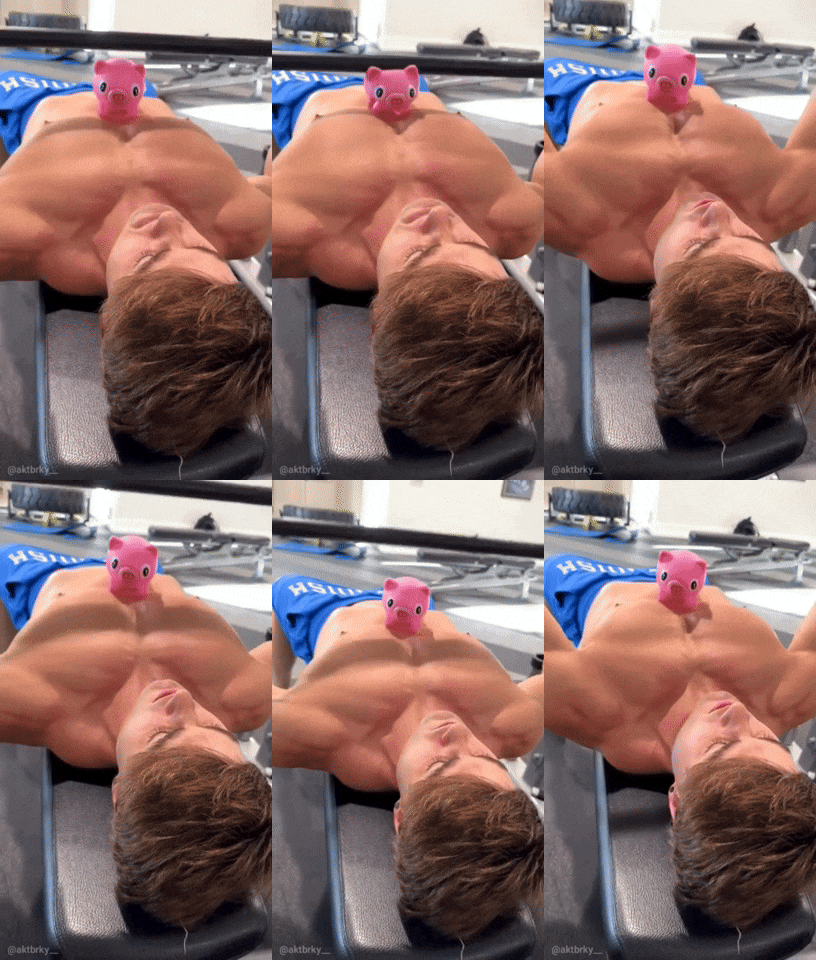
A funny meme of someone bench pressing with a toy pig on their chest to check the touch point and full range of motion.

As the foundation of upper body workouts, the bench press is the most popular exercise in the gym. It is hard to find a more definitive and intuitive exercise for increasing the thickness and volume of your chest muscles.

However, if you simply think of it as ‘lying on a bench and pushing a heavy barbell,’ you will likely experience your shoulders or elbows giving out first, rather than the chest pump you desperately want.

The true effect of the bench press doesn’t come from surviving heavy weights, but from the posture that controls the weight and accurately targets the desired area.
In this guide, we will clearly break down why the bench press is essential, the details many people miss, and the correct setup to focus solely on your chest muscles.


Why Stable Stimulation Matters in the Bench Press

  • The Power Driving Massive Chest Growth

The bench press is a multi-joint exercise that allows you to handle the heaviest weights stably for your anterior upper body muscles. Unlike machine exercises where you rely on the equipment, balancing and pushing the barbell yourself is incredibly effective for building the overall size and definition of your chest.

  • Coordination Supporting the Entire Upper Body

It’s not just the chest; your shoulders (anterior deltoids), arms (triceps), and the core that maintains your posture are all used organically. It raises the fundamental standard of your pushing power, creating a synergy that boosts your performance in other upper body exercises like the military press or incline press.
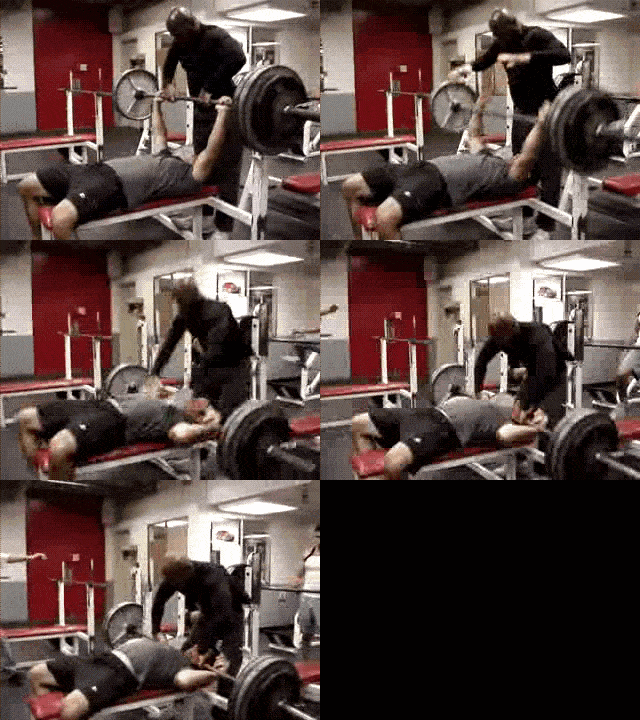

3 Common Mistakes Stealing Your Chest Stimulation

If you’ve ever felt discomfort in your shoulders or wrists while bench pressing, it’s highly likely that one of the following patterns is hiding in your form.

1. Flaring Elbows Out 90 Degrees
Focusing too much on moving the barbell ‘vertically’ up and down, many people flare their elbows parallel to their shoulders (90 degrees) and lower the barbell toward their collarbones or neck. When looking down from above, your body and arms form a right angle. Lowering the weight in this path easily causes shoulder impingement. It is the most dangerous movement to avoid, as it completely releases the tension in your chest muscles and drastically increases the risk of shoulder injury.

2. Unfixed Scapulae (Shoulder Blades) on the Bench
If you just lie flat on the bench, your chest muscles won’t be able to open and stretch fully when lowering the barbell. Ultimately, your shoulders will round forward to take the weight instead of your chest. The stimulation in your chest disappears, and the involvement of your shoulders becomes abnormally high.

3. Unstable Grip with Wrists Bent Backwards
If you grip the barbell too close to your fingers, your wrists will bend backward, unable to handle the weight. Pushing in this state transfers the vertical resistance of the barbell directly to the bent wrist joints rather than the center of your palms, causing a stinging pain and loss of power.

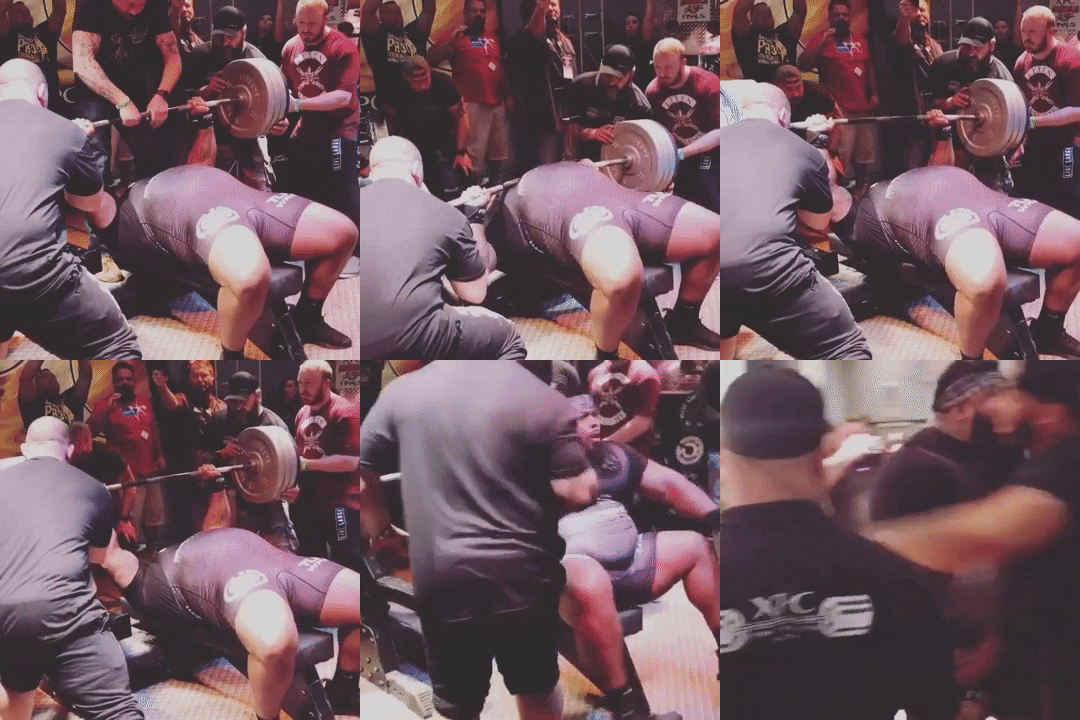
The 4 Steps to Focus Solely on Your Chest

Let’s check the 4 key points to eliminate instability and focus solely on your chest muscles.

  • Step 1: Secure Scapulae with Shoulder Packing
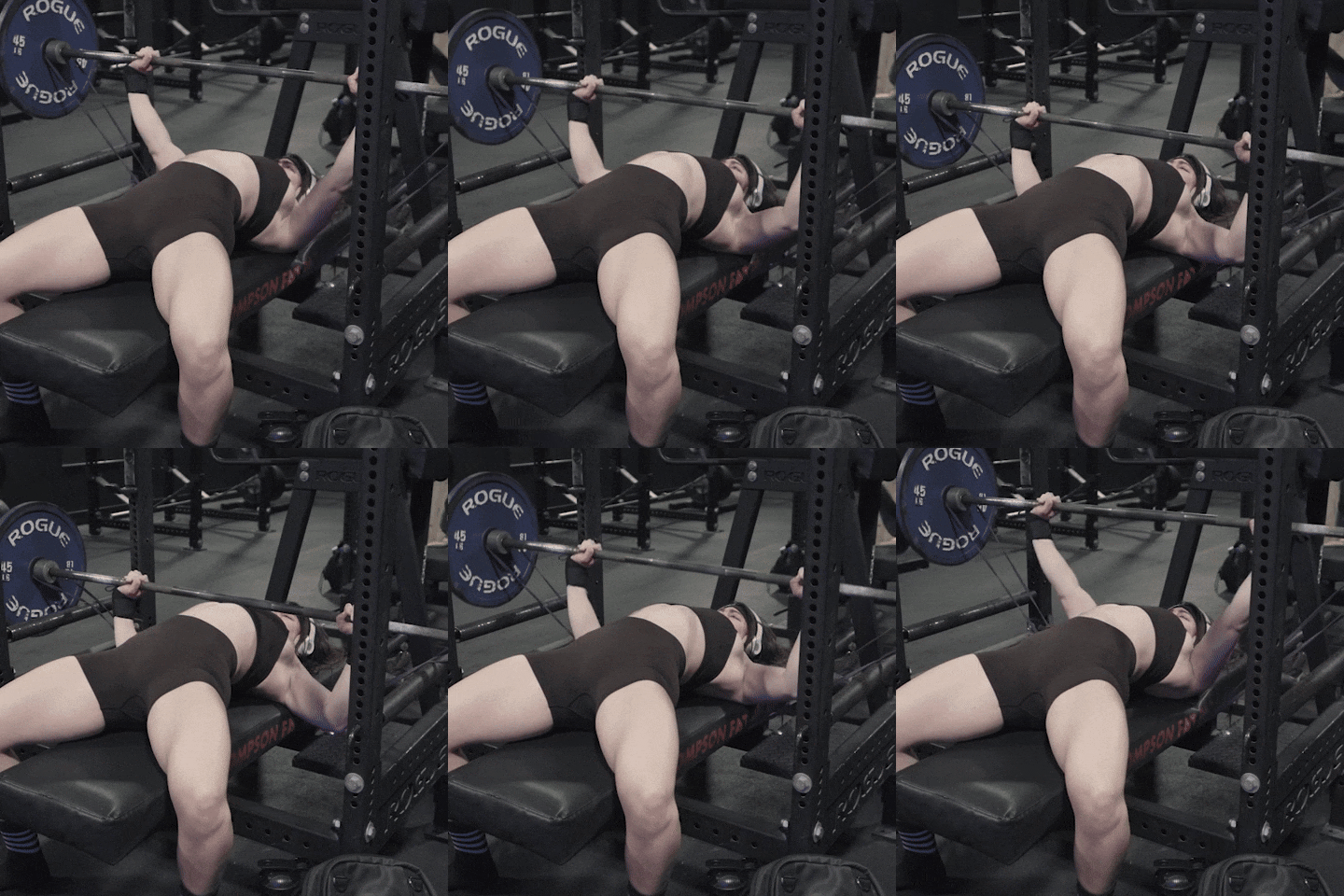
    When lying on the bench, pinch your shoulder blades together in the center of your back and pull them down slightly. Naturally, a thoracic arch should form where your ‘chest’—not your lower back—rises upward. This narrows the contact area of your shoulders on the bench, protecting your joints and fully opening your chest muscles. This is the first step of the bench press.

  • Step 2: Keep Elbows at a 45-60 Degree Angle from Your Body
    When lowering the barbell to your chest, naturally tuck your elbows toward your body so they aren’t parallel to your shoulders. When looking down from above, the shape of your arms and body shouldn’t be a right angle, but a stable arrow shape (⬇) slanting downwards. This is the correct path.

  • Step 3: Lower the Barbell Between the Solar Plexus and Nipples
    Do not drop the barbell toward your collarbones. It should come down at a slight diagonal toward the area between your solar plexus and nipples (lower chest). This allows your shoulder joints to open comfortably, and you will feel a heavy stretch across your entire chest. (When pushing back up, push vertically toward the ceiling.)

  • Step 4: Control Your Whole Body with Leg Drive
    The bench press is an upper body exercise, but to push heavy weights steadily, solid support from your lower body is essential. Plant your feet firmly on the floor and apply force by pushing the ground hard with your entire soles. This prevents your upper body arch from collapsing and allows you to generate explosive power like a solid spring.
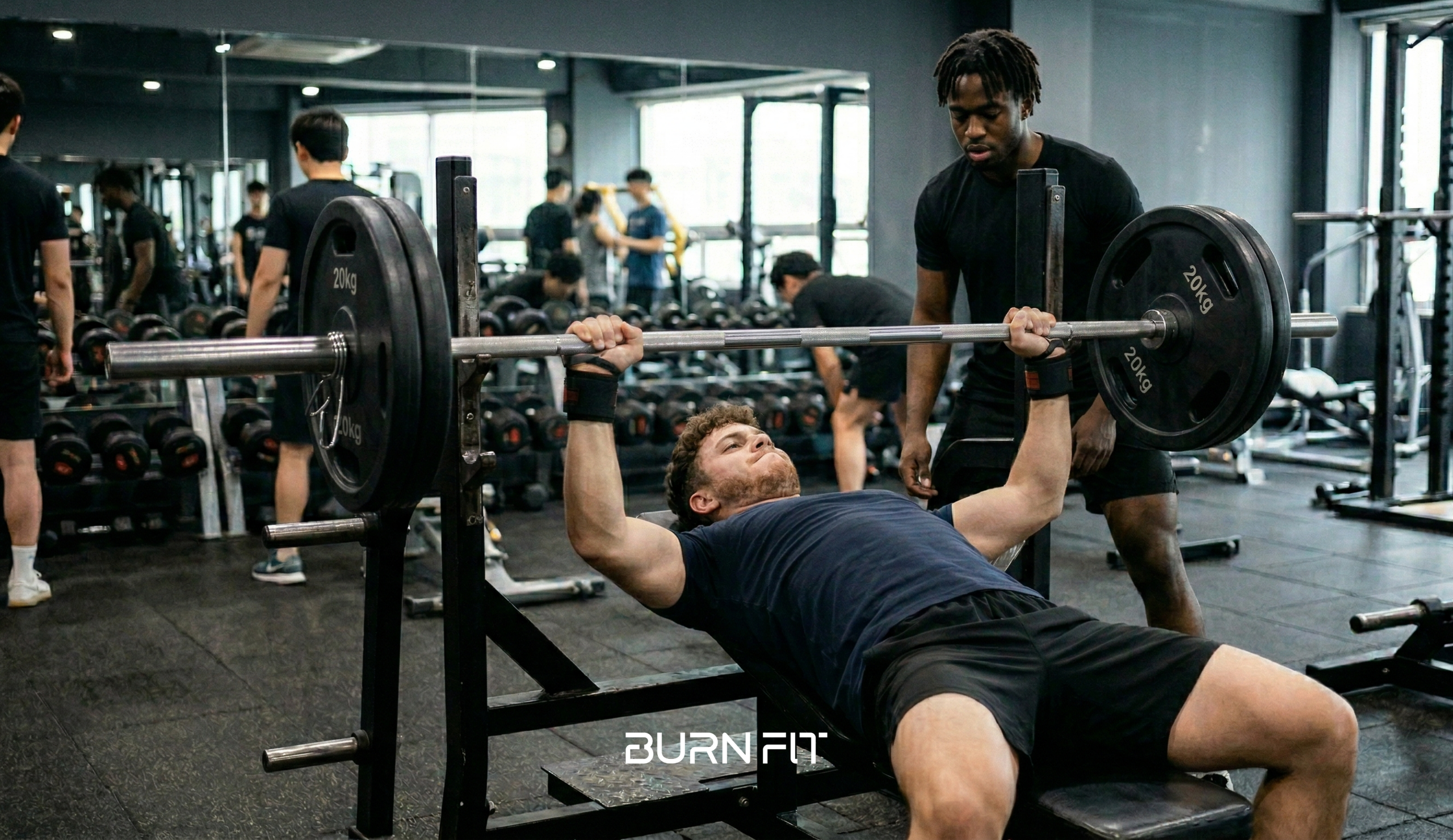
BurnFit - Barbell Bench Press

When You Focus on Posture Over Weight, Your Chest Grows

The bench press is not an exercise where you just endure lifting heavy barbells. True growth is achieved only when you create a safe path with a weight you can control and focus entirely on the sensation of your chest muscles stretching and contracting.

If your posture shakes or you don’t feel the stimulation in the right area, boldly take off the plates and go back to the empty bar. The process of firmly setting your scapulae and refining the correct movement will be the fastest and most honest shortcut to building a broad and solid chest.

gif image source: GIPHY, Pinterest

FORBES HEALTH

Best Workout data tracking부분 4년 연속 선정

최고의 운동 데이터 분석 앱
(2022~2025)

FORBES HEALTH

Best Exercise Data Tracking Part 4 Years in a row

Best Exercise Data Analysis App
(2022~2025)

FORBES HEALTH

Best Workout Data Tracking部門で4年連続受賞

最高の運動データ分析アプリ
(2022~2025)

FORBES HEALTH

Best Workout data tracking部分連續4年選定

最佳運動數據分析軟件
(2022~2025)