Your chest press might not be working the way you think it is.
If you rarely feel your chest engaging,
if your shoulders get tired first,
or if your arms seem to take over the movement,
there’s a high chance your form needs fixing.
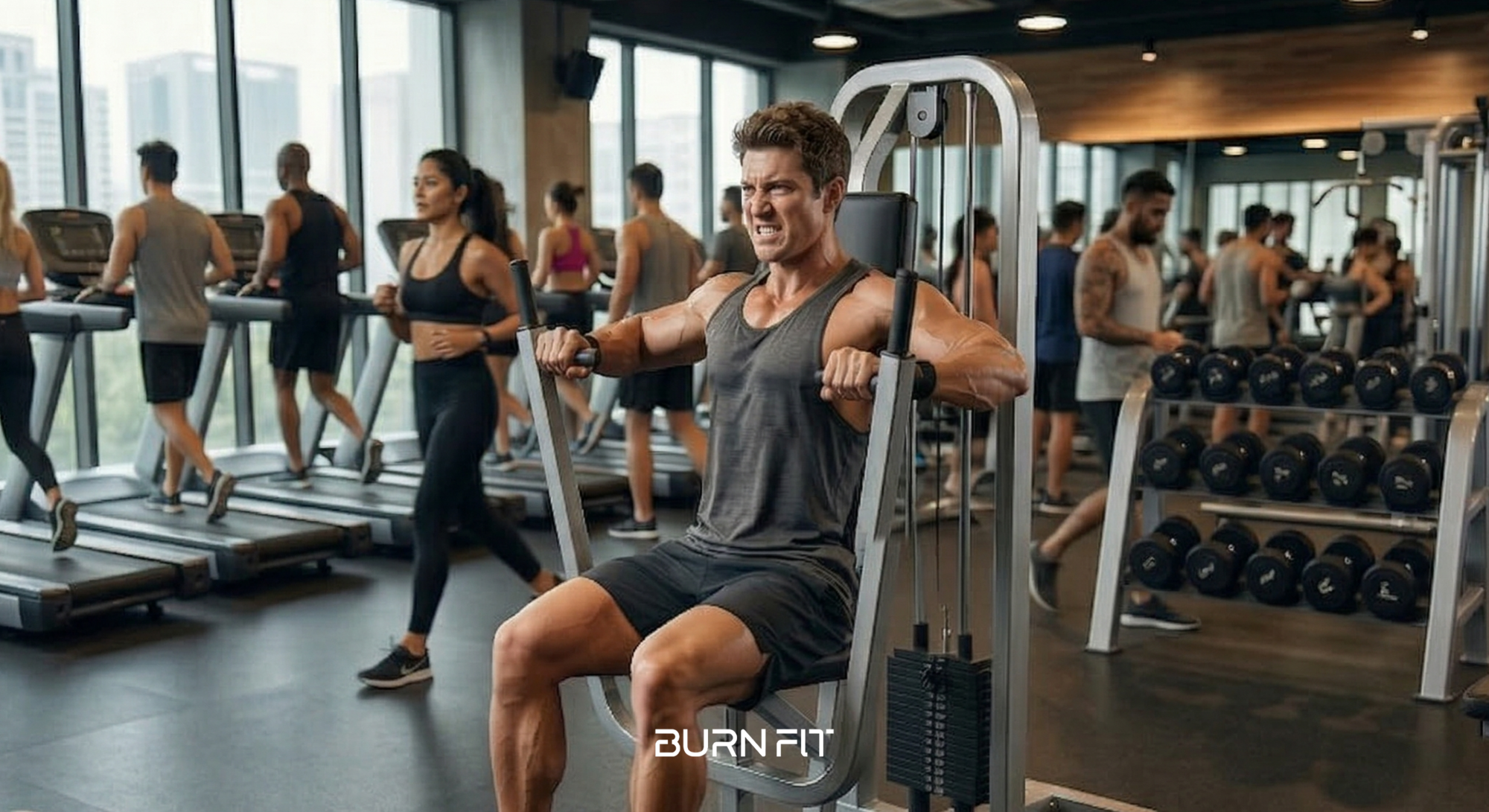
The Chest Press: One of the Most Popular Chest Exercises
The chest press is one of the most popular chest exercises in the gym.
Because it allows you to stimulate the chest muscles in a stable way, it is often one of the first chest workouts beginners learn.
Why Chest Press Mistakes Are So Common for Beginners
If an exercise is loved by beginners, it also means there’s a higher chance of doing it incorrectly.
Many people start the chest press without much thought about chest press form or muscle engagement.
And this is exactly when the problem appears — the moment when most chest press mistakes happen.
Signs You Might Be Doing the Chest Press Wrong
The most common signs include:
You barely feel your chest working
Your shoulders get tired first
Your arms are doing most of the work
In Most Cases, the Problem Is Incorrect Chest Press Form
In many cases, these symptoms happen because the chest press form is incorrect.

Why Chest Press Form Matters More Than Weight
The chest press may look like a simple exercise where you just push the weight away.
But even a small mistake in your chest press form can completely change which muscles are actually doing the work.
In other words, checking your form matters more than simply adding more weight.
What You’ll Learn in This Guide
In this article, we’ll cover:
The muscles worked during the chest press
Why the chest press is an effective chest exercise
Common chest press mistakes many people make
How to perform the chest press to maximize chest engagement
Why the Chest Press Is an Effective Chest Exercise
The chest press machine is one of the most stable exercises for targeting the chest muscles among all chest workouts.

Easy for Beginners to Start
The bench press, which requires you to control the barbell directly, can feel intimidating for beginners.
In contrast, the chest press machine guides the movement along a fixed path, making it easier for people who are new to strength training to use.
That’s why many gyms recommend the chest press as a beginner-friendly chest exercise.
Easier to Focus on the Chest Muscles
Because the chest press machine follows a controlled movement path, it allows you to focus more on using your chest muscles.
When you maintain proper chest press form, you can create strong activation across the entire pectoralis major.
Relatively Lower Risk of Injury
The chest press machine is designed with a stable structure, which generally makes it safer than the bench press.
For this reason, not only beginners but also experienced lifters often use the chest press as an accessory chest exercise.

Muscles Worked in the Chest Press
When using the chest press machine, several upper-body muscles are involved.
The primary muscles include:
Pectoralis Major
Anterior Deltoid
Triceps
Among these, the pectoralis major is the most important muscle.
It is responsible for pushing the arms forward during pressing movements.
It is also the key muscle used in major chest exercises such as the chest press, bench press, and push-ups.
If you feel your chest contracting firmly during the chest press, it usually means the pectoralis major is being properly engaged.
On the other hand, if you barely feel your chest working and only your shoulders or arms become fatigued, it often means your chest press form is incorrect.
Three Common Chest Press Mistakes
The chest press may look like a simple exercise, but in most gyms you’ll notice many people making similar mistakes.
The three most common chest press mistakes are the following.
Letting the Shoulders Roll Forward
During the chest press, many people perform the movement with their shoulders rolled forward.
In this position, the shoulder joint becomes more involved than the chest muscles.
As a result, chest activation decreases while the stress on the shoulders increases.
Pushing Mainly With the Arms
The chest press is a chest exercise, not an arm exercise.
However, many people end up pushing the weight primarily with their arms instead of their chest.
In this case, it helps to consciously focus on the feeling of pressing the weight with your chest.
Using Momentum During the Chest Press
As the weight increases, the movement often becomes faster and less controlled.
Many people push the weight quickly but fail to control the return phase.
However, in chest training, the slow, controlled lowering phase is often more important.
Recommended Chest Press Tempo
To improve chest engagement and control, try the following tempo:
Press: 2 seconds
Pause: 1 second
Return: 3 seconds
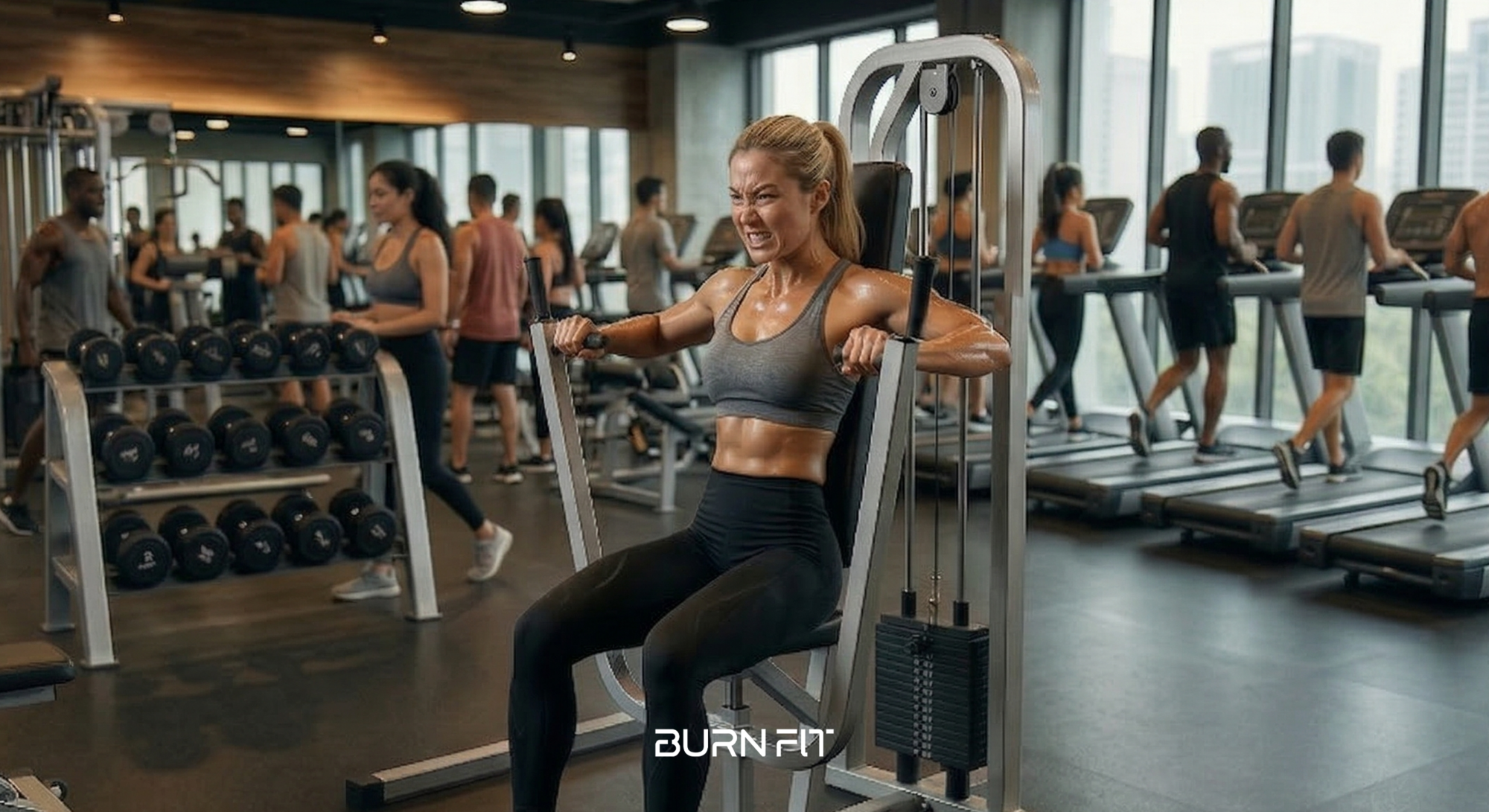
How to Perform the Chest Press Correctly
So how should you perform the chest press properly?
The good news is that it’s not an exercise that requires complicated technique.
By following a few basic chest press form principles, you can make the chest activation much clearer.
1. Set Your Shoulders First
Before starting the chest press, pull your shoulders slightly back and naturally open your chest.
If you perform the movement with your shoulders rolled forward, the shoulder joint will take over before the chest muscles.
In the chest press, the key cue is to start with your chest open.
2. Keep Your Elbows at About 45 Degrees
If your elbows flare out too much from your body, it can increase stress on the shoulders.
On the other hand, if you tuck your elbows too close to your body, chest activation may decrease.
For the chest press, an elbow angle of about 45 degrees relative to your torso is generally the most stable position.
3. Control the Return Phase Slowly
Many people focus only on pushing the weight quickly, while letting the weight drop back without control.
However, in chest training, the lowering phase (eccentric movement) is even more important.
Recommended Chest Press Tempo
Press: 2 seconds
Pause: 1 second
Return: 3 seconds
How to Check Your Chest Press in BurnFit 👇
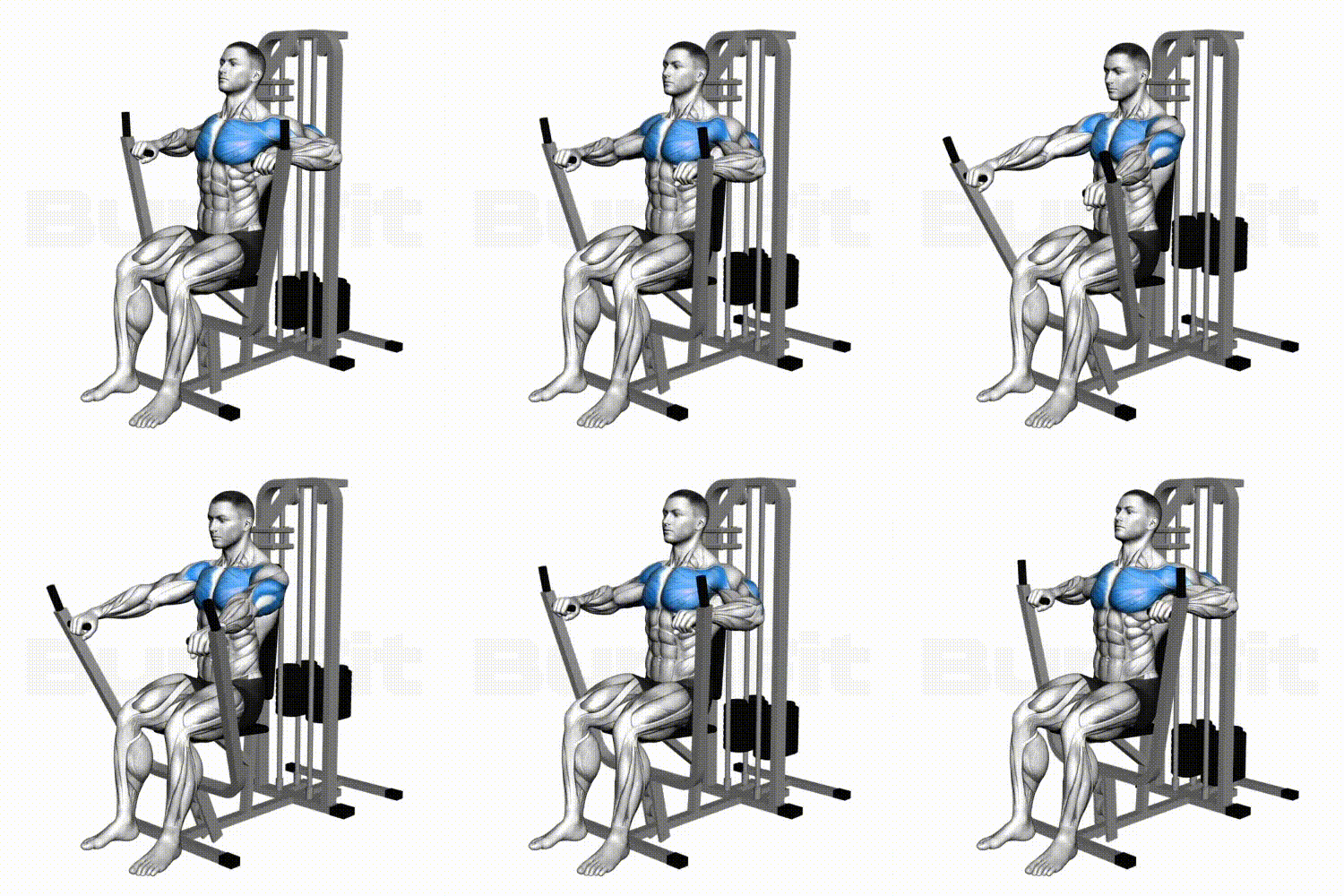
Editor’s Chest Press Tips for Lifters Beyond the Beginner Stage
People who have spent time training in the gym often use a few small techniques when performing the chest press.
They may seem minor, but they can significantly change how well you feel the chest muscles working.
Don’t Grip the Handles Too Hard
The key idea is to focus on pushing with your chest, not your hands.
During the chest press, gripping the handles too tightly often causes the arms and forearms to take over the movement.
Instead, think about driving the weight with your chest muscles.
Pause Briefly at the End of the Movement
A short pause can create a much stronger chest contraction.
At the point where your chest muscles are fully contracted, try pausing for about one second.
Prioritize Muscle Engagement Over Weight
Focus first on finding the feeling of your chest muscles contracting properly.
The chest press is not a competition of weight—it’s about effective chest activation.

Conclusion
The chest press is one of the most fundamental chest exercises in the gym.
But with basic exercises, even small differences in form can significantly change the results.
If you’re not feeling your chest working properly,
check your chest press form before increasing the weight.
Sometimes, even a small adjustment can completely change how the chest press feels.

