

1. How to Do the Leg Press With Proper Form
Good leg press technique starts with a stable setup.
Before adding weight, take a moment to adjust the seat and check your range of motion.

① Set Up Your Position
Sit with your back and hips firmly against the backrest.
Start with your feet about hip- to shoulder-width apart.
Keep your entire foot in contact with the platform, with your toes angled slightly outward if comfortable.
Adjust the seat so you can lower the platform without your hips lifting or your lower back rounding.
② Lower the Weight With Control
Release the safety handles according to the machine’s instructions.
Slowly bend your knees and lower the platform.
Keep your knees aligned with your toes.
Stop when you reach the deepest position you can manage while keeping your back and hips against the pad.
You don’t need to force your knees to a 90-degree angle. Your comfortable range of motion will depend on your mobility, body proportions, and machine setup.
③ Push the Platform Away
Push through your whole foot, keeping your heels on the platform.
Extend your legs smoothly without snapping or forcefully locking your knees.
Avoid bouncing at the bottom of the movement.
💡 Tip: Start with a light weight while you get familiar with the machine. Focus on controlled movement and a comfortable range of motion before increasing the load.
2. What Muscles Does the Leg Press Work?
The leg press primarily works the muscles in your lower body. The amount of activity in each muscle can vary depending on your foot position, range of motion, and the load you use.
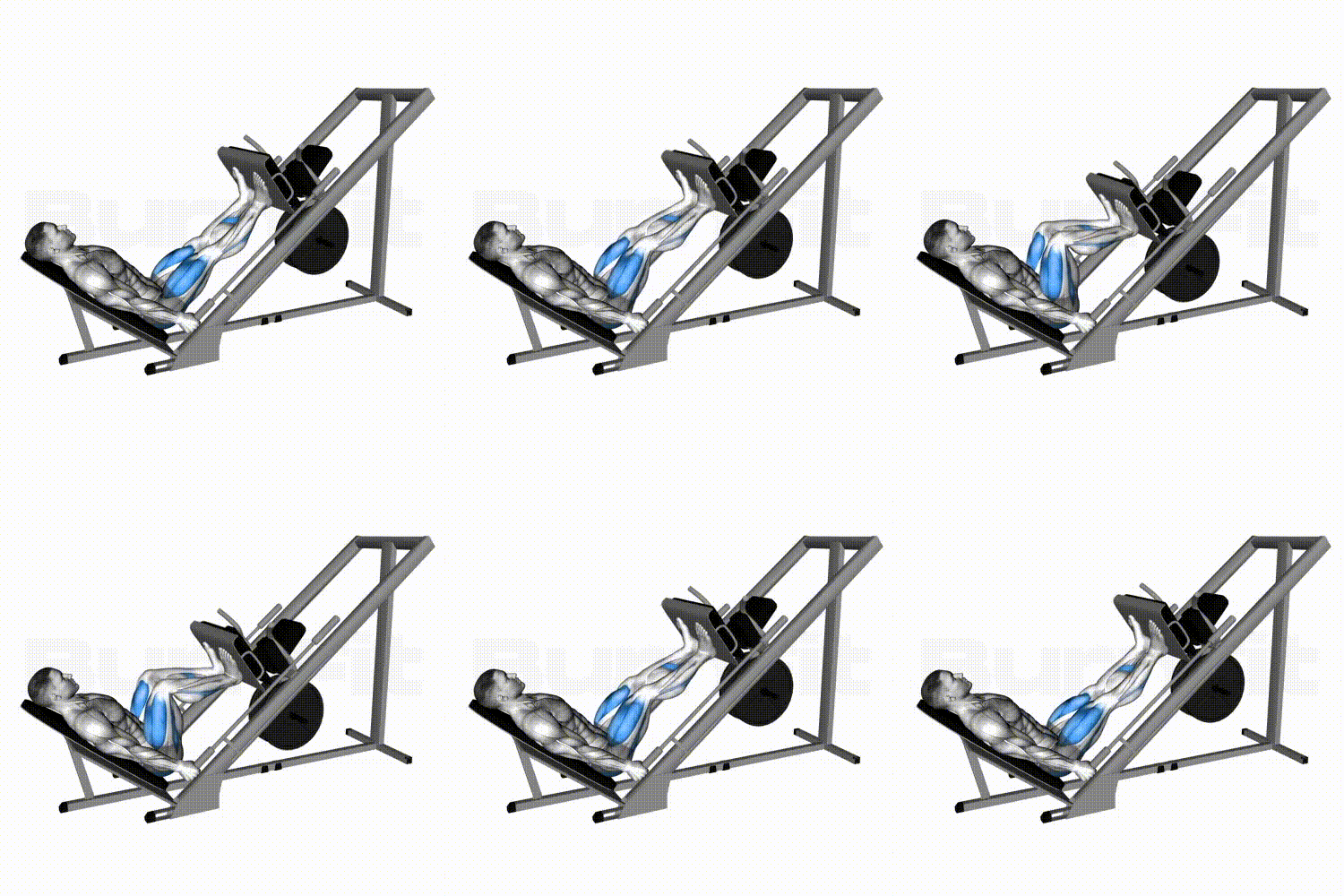
① Quadriceps
The quadriceps are the muscles at the front of your thighs. They play a major role in extending your knees as you push the platform away.
② Gluteus Maximus
The gluteus maximus, or glutes, helps extend your hips during the pushing movement. You may feel your glutes working more as you lower the platform into a deeper position, provided you can maintain a stable posture.
③ Hamstrings and Calves
The hamstrings and calf muscles also contribute to the movement. Their level of activity may vary depending on the exercise setup and how you perform each repetition.
A systematic review of leg press research found that the exercise recruits several lower-body muscles, including the quadriceps, gluteus maximus, hamstrings, and calves. [1]
3. Leg Press Foot Placement: Does It Change Muscle Engagement?
Where you place your feet on the platform can affect which muscles are more active during the leg press. Research has compared higher and lower foot positions to examine these differences.

① High Foot Placement
Placing your feet higher on the platform may increase glute involvement. In a study of 14 women, gluteus maximus activity was greater with a high foot position than with a low one. [2]
② Low Foot Placement
Placing your feet lower may increase activity in the muscles at the front of your thighs. In the same study, at 80% of one-rep max (1RM), the rectus femoris and vastus lateralis—two of the quadriceps muscles—showed greater activity with a low foot position than with a high one. [2]
💡 Tip: These findings show differences in muscle activity during the exercise, not a guarantee of greater muscle growth over time. Choose a foot position that feels comfortable, keeps your whole foot in contact with the platform, and allows your knees to move smoothly.
4. 5 Common Leg Press Mistakes to Avoid
Even when you know the basic movement, a few common mistakes can make the leg press harder to perform safely and consistently.

① Using Too Much Weight
Adding weight too quickly can make it difficult to control the movement. You may end up shortening your range of motion or using momentum to move the platform.
Start with a weight that allows you to complete each repetition with consistent form. Increase it gradually as you become more comfortable with the exercise.
② Lowering the Platform Too Far
Lowering the platform beyond your comfortable range can cause your hips to lift or your lower back to round away from the backrest.
Only lower the weight as far as you can while keeping your hips and back supported.
③ Letting Your Knees Collapse Inward
Your knees should generally move in the same direction as your toes. If they collapse inward as you push, reduce the weight and focus on controlling your knee position throughout the movement.
④ Lifting Your Heels
If your heels come off the platform, you may lose a stable base for pushing. Keep your whole foot in contact with the platform and adjust your foot position or range of motion if needed.
⑤ Bouncing or Locking Your Knees
Bouncing at the bottom uses momentum instead of controlled movement. Forcefully locking your knees at the top can also place unnecessary stress on the joints.
Move smoothly in both directions, and keep a slight bend in your knees at the top rather than snapping them straight.
Remember: If you feel sharp or unusual pain during the exercise, stop and reassess your setup and range of motion rather than trying to push through it.
Track Your Leg Press Progress With BurnFit 🔥
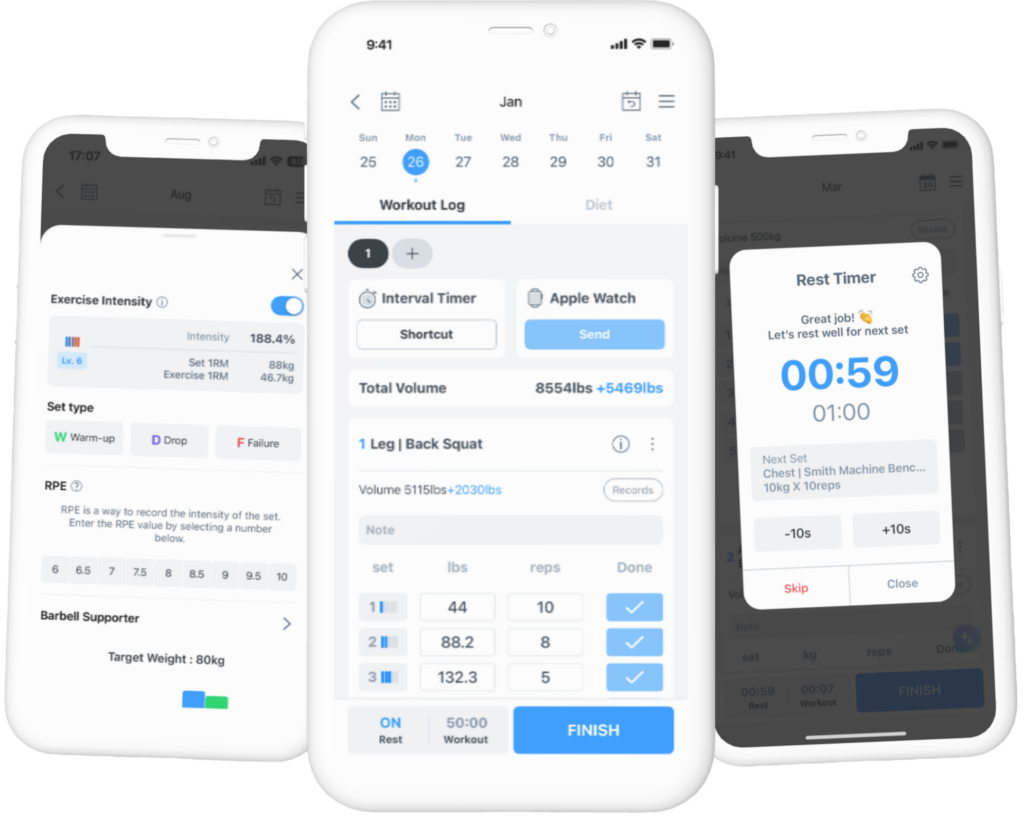
Getting stronger takes consistency. Tracking your workouts helps you see how your training changes over time and gives you a reference point for your next session.
With BurnFit, you can:
Record your sets: Log the weight, reps, and sets for each leg press workout.
Check previous records: Review your last session to see what you lifted and how many reps you completed.
Keep workout notes: Save details about your foot position, machine setup, or how the exercise felt.
For a quick reference on the exercise setup and basic movement, check out the Leg Press guide in the BurnFit Exercise Library.
Start by recording the weight and reps from today’s leg press workout. Over time, these small records can help you see your progress more clearly.


Leg Press: Are You Making These 5 Mistakes?
Leg Extension: 3 Tips for Better Form
Seated Cable Row: 3 Tips for Better Form
Strength Training for Beginners: 5 Exercises, Benefits & Routine
Hevy vs BurnFit: Which Workout Tracking App Fits the Way You Train?
7 Key Lower Body Strength Exercises for Every Muscle Group